tencent cloud

Chat

News and Announcements
Release Notes
Announcements
Product Introduction
Overview
Basic Concepts
Scenarios
Features
Account System
User Profile and Relationship Chain
Message Management
Group Related
Official Account
Audio/Video Call
Use Limits
Purchase Guide
Billing Overview
Pricing
Purchase Instructions
Renewal Guide
Service Suspension Explanation
Refund Policy
Development Guidelines
Demo Zone
Activate Service
Free Demos
Quick Run
Download
SDK and Demo Source Code
Update Log
Chat Interaction (UI Included)
TUIKit Introduction
Getting Started
Full-feature Integration
Single-function Integration
Build with AI
Build Basic Interfaces
More Features
Customizing Appearance
Internationalization
Push Service
Overview
Noun explanation
Activate the Service
Quick Start
Manufacturer Channel
Statistics
Troubleshooting Tool
Client APIs
REST API
Push Callback
Advanced Features
Release Notes
Error Codes
FAQS
Desk
Overview
Quick Start
Integration Guide
Admin Operation Manual
Agent Manual
More Practices
Live Streaming Setup Guide
AI Chatbot
Super Large Entertainment and Collaboration Community
Discord Implementation Guide
How to Integrate Chat into Games
WhatsApp Channel-style Official Account Integration Solution
Send Red Packet
Firewall Restrictions
No UI Integration
Quick Start
SDK Integration
Initialization
Login and Logout
Message
Conversation
Group
Community Topic
User Profile and Relationship Chain
Offline Push
Cloud Search
Local Search
Official Channel Management
Client APIs
JavaScript
Android
iOS & macOS
Swift
Flutter
Electron
Unity
React Native
C APIs
C++
Server APIs
Secure authentication with UserSig
RESTful APIs
Webhooks
Console Guide
New Console Introduction
Creating and Upgrading an Application
Basic Configuration
Feature Configuration
Account Management
Group Management
Official Channel Management
Webhook Configuration
Usage
Viewing Guide for Resource Packages
Real-Time Monitor
Auxiliary Development Tools
Access Management
Advanced Features
FAQs
uni-app FAQs
Purchase
SDK
Account Authentication
User Profile and Relationship Chain
Message
Group
Audio-Video Group
Nickname and Profile Photo
Security Compliance Certification
Service Level Agreement
Security Compliance Certification
Chat Policies
Privacy Policy
Data Privacy and Security Agreement
Migration
Migration Solutions
Migration Solutions Lite
Error Codes
Contact Us
DocumentationChatConsole GuideWebhook Configuration

Webhook Configuration

PDF
Focus Mode
Font Size
Last updated: 2025-12-08 17:12:39
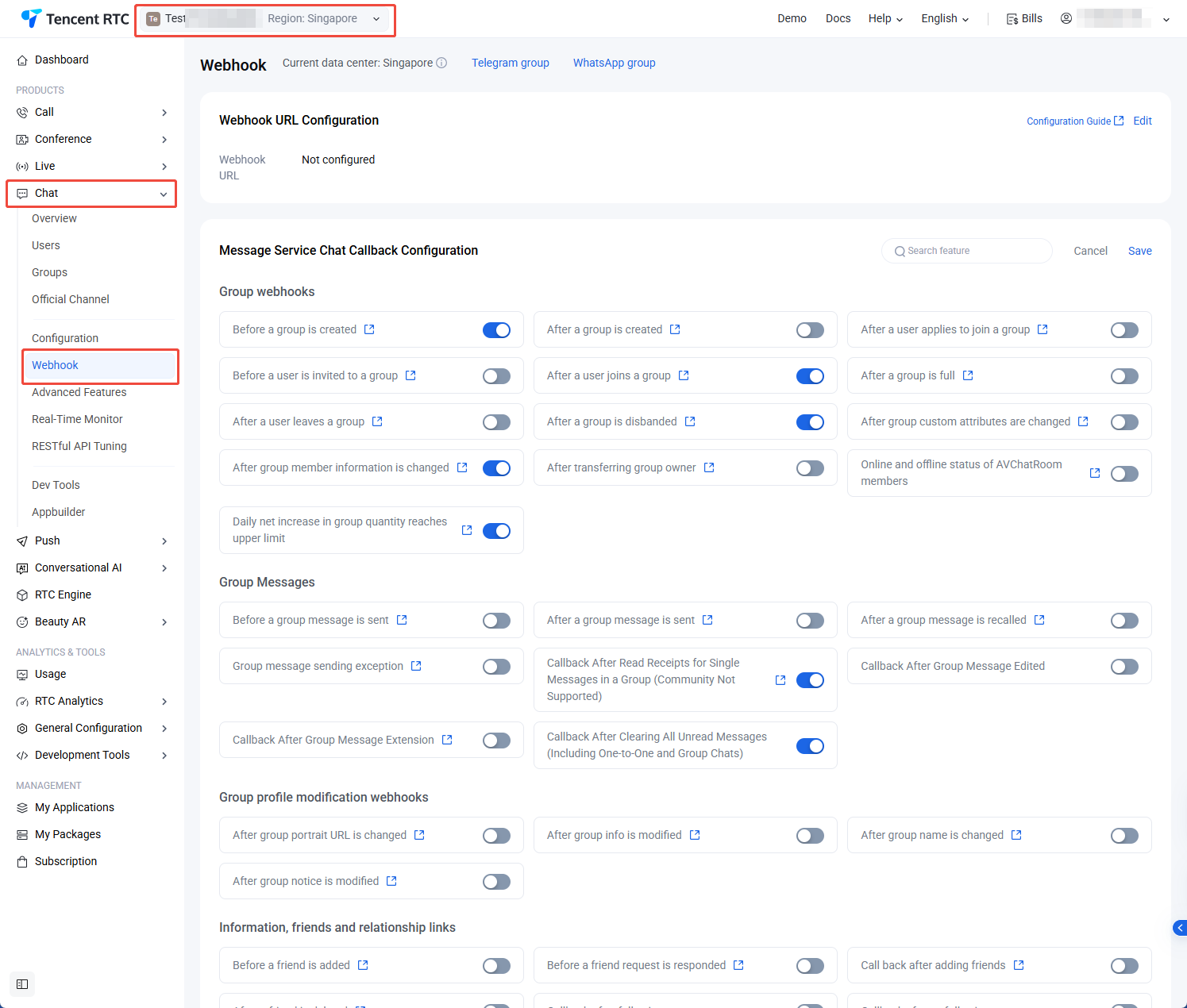
Log in to the Chat console, select Chat > Webhook in the left sidebar, and select target application at the top. You can configure the callback URL and enable which callbacks based on actual business needs.


Configuring Webhook URLs

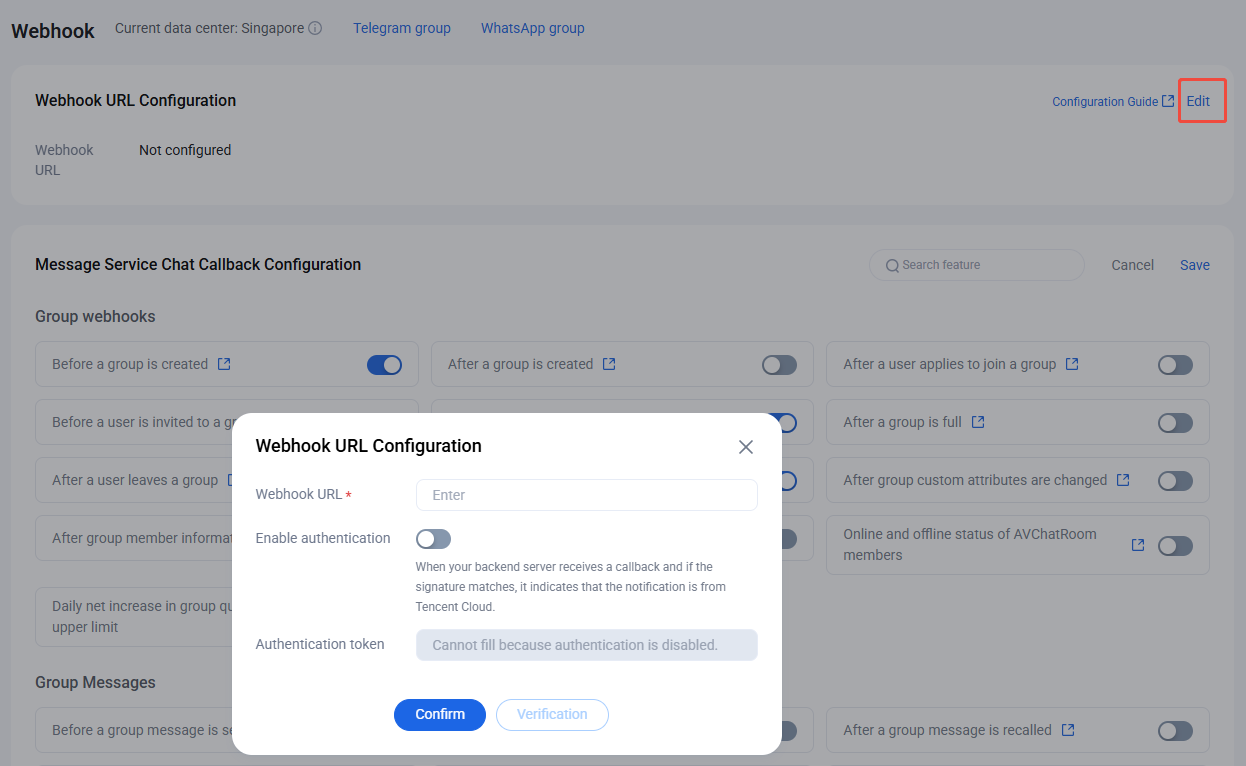
1. On the Webhook Configuration page, click Edit in the webhook URL configuration area.


2. In the webhook URL configuration dialog box that pops up, enter the webhook URL.
Note:
The webhook URL must start with http:// or https://.
If you have not yet applied for a domain name, you can directly configure an IP address, for example, http://123.123.123.123/imcallback.
Only letters (a–z, case-insensitive), numbers (0–9) and hyphens (-) can be used. Spaces and the following characters are not supported: !$&?.
The hyphen (-) cannot appear consecutively, be registered independently, or be placed at the beginning or end.
The length of the domain name cannot exceed 63 characters.
The webhook URL of Chat uses ports 80/443 by default. When the webhook URL is replaced, port changes are involved. Please avoid the situation where the ports before and after the replacement are mutually prefixed; for example, avoid changing https://xxx:443 to https://xxx:4433 or changing https://xxx to https://xxx:4433.
3. Click OK to save the configuration.

Configuring Event Webhooks

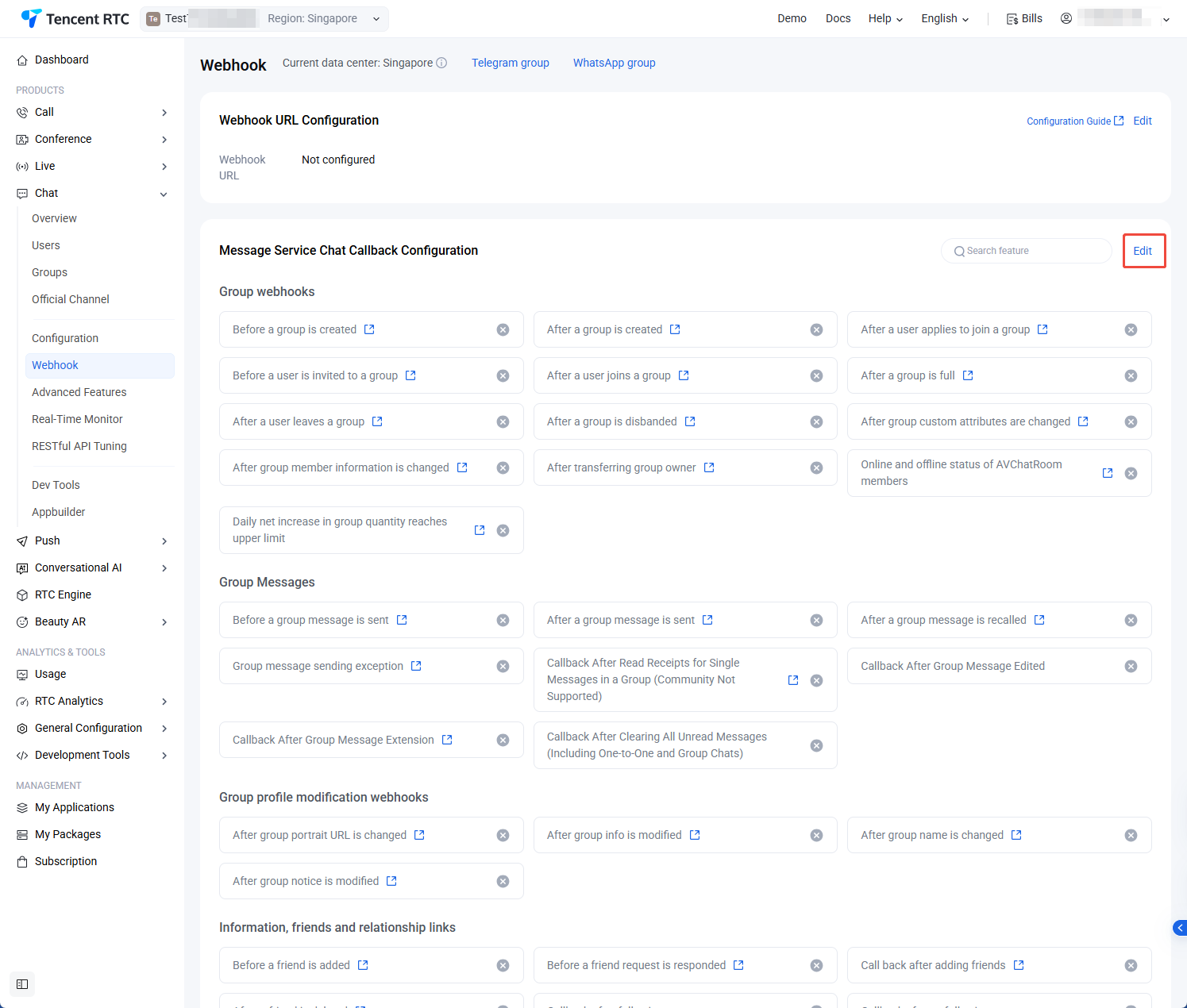
1. On the Webhook Configuration page, click Edit in the webhook configuration area. In the pop-up window for edit, select the feature to configure.
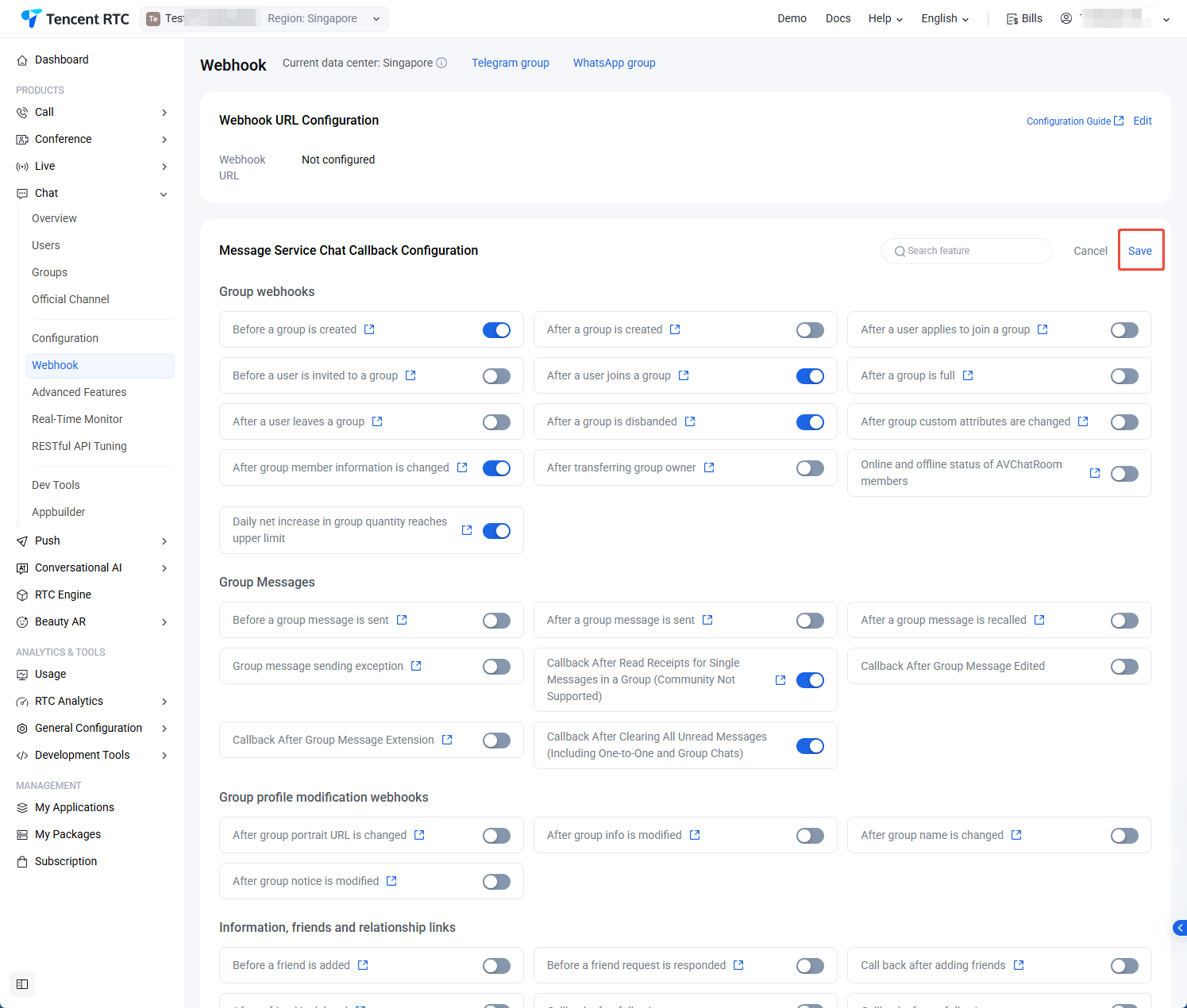
2. In the webhook configuration dialog box that pops up, check the desired webhooks.


Note:
Certain Webhook features require enabling the corresponding function in the console before they can be triggered. For details, please refer to the Webhook Event Activation Guide.
3. Click Confirm to save the configuration.

Subsequent Operations

After configuring webhook URLs and enabling the corresponding event webhooks, you can refer to Webhooks to use the corresponding webhooks in order to obtain user and operation information in real time.

Webhook Event Activation Guide

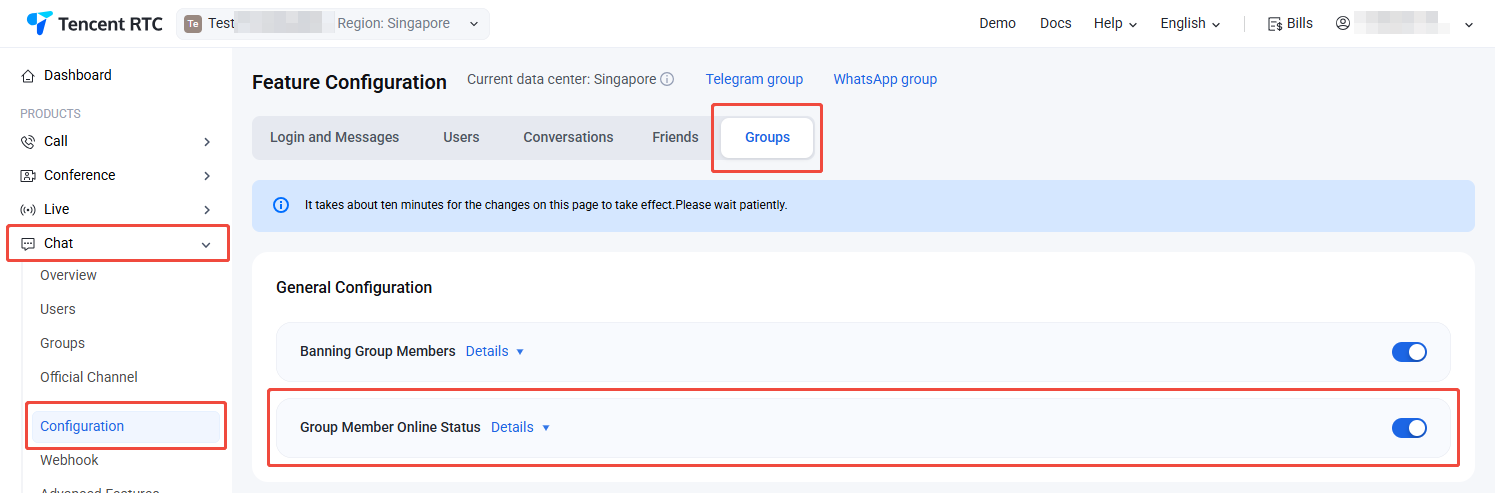
Live Group Member Online Status Webhook

To enable the online status callback for AVChatRoom members, first toggle on the group member online status switch in Chat > Configuration > Custom User Field.


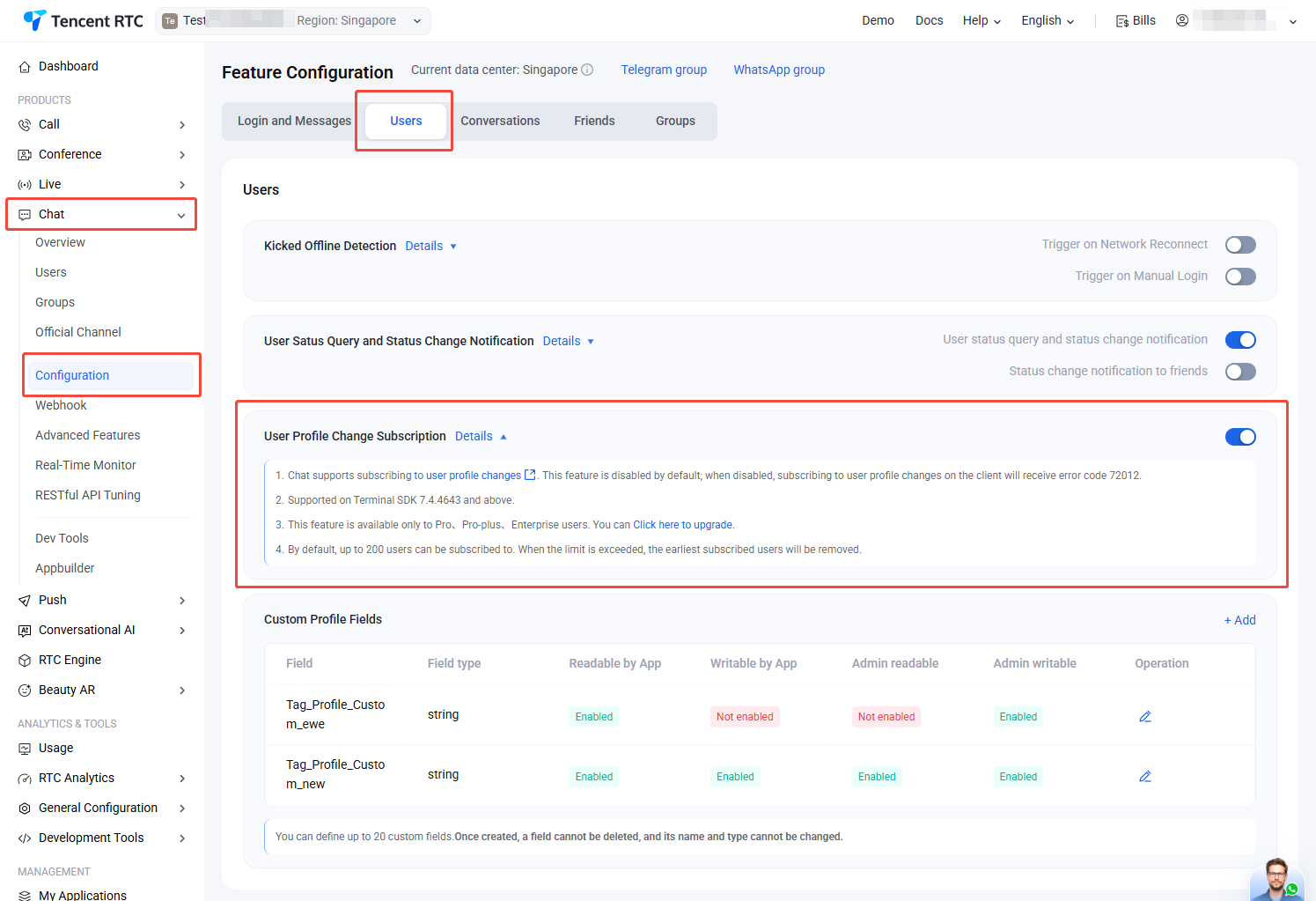
User Profile Change Webhook

To enable the User Profile Change Webhook, first toggle on the user profile change subscription switch in Chat > Configuration > Login and Message.


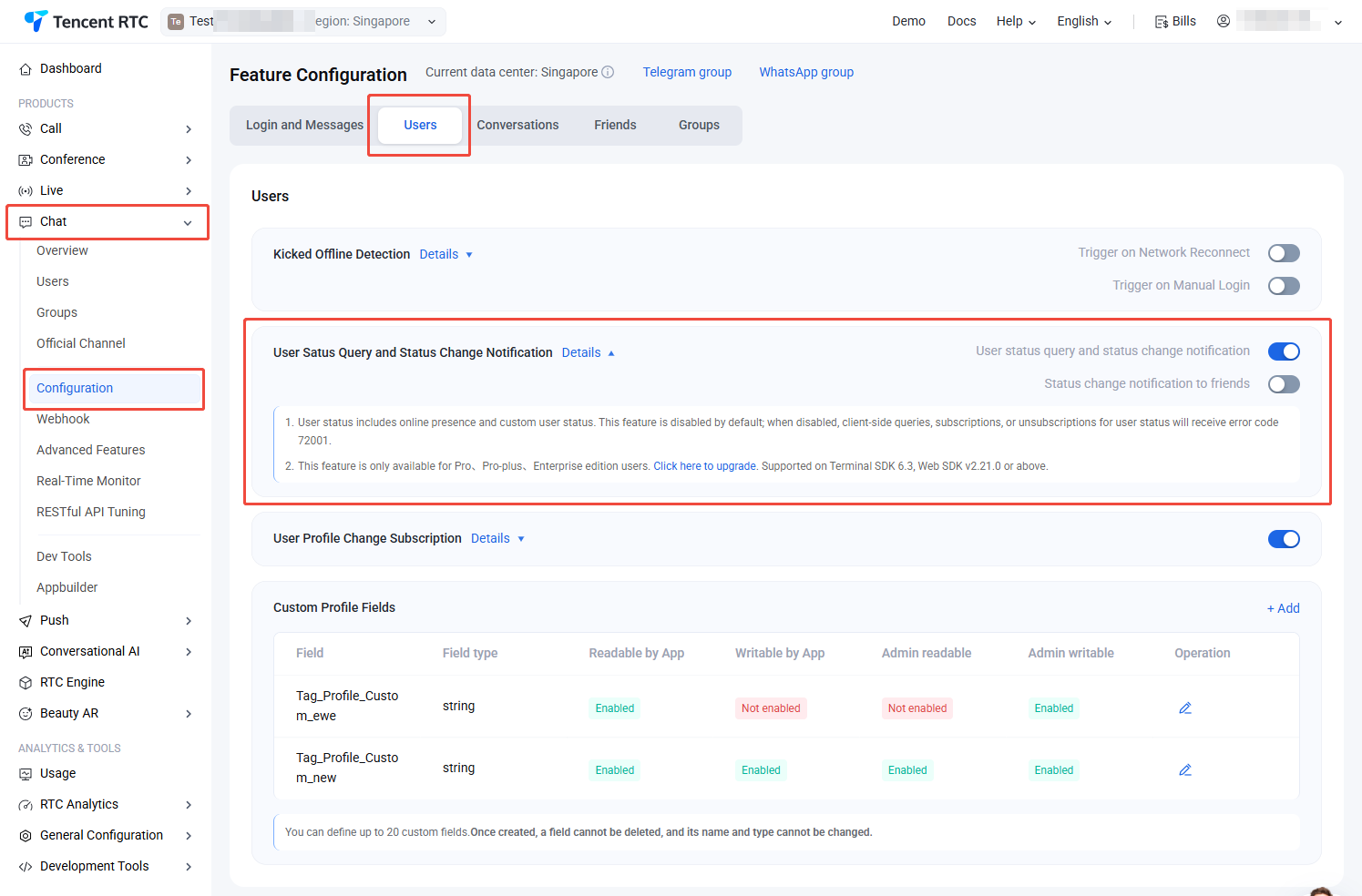
Online Status Callback

To enable the Online Status Callback, first toggle on the User Status Inquiry and Status Change Notification configuration switch in Chat > Configuration > Login and Message.


Help and Support

Was this page helpful?

Help us improve! Rate your documentation experience in 5 mins.

Feedback