tencent cloud

Chat

News and Announcements
Release Notes
Announcements
Product Introduction
Overview
Basic Concepts
Scenarios
Features
Account System
User Profile and Relationship Chain
Message Management
Group Related
Official Account
Audio/Video Call
Use Limits
Purchase Guide
Billing Overview
Pricing
Purchase Instructions
Renewal Guide
Service Suspension Explanation
Refund Policy
Development Guidelines
Demo Zone
Activate Service
Free Demos
Quick Run
Download
SDK and Demo Source Code
Update Log
Chat Interaction (UI Included)
TUIKit Introduction
Getting Started
Full-feature Integration
Single-function Integration
Build with AI
Build Basic Interfaces
More Features
Customizing Appearance
Internationalization
Push Service
Overview
Noun explanation
Activate the Service
Quick Start
Manufacturer Channel
Statistics
Troubleshooting Tool
Client APIs
REST API
Push Callback
Advanced Features
Release Notes
Error Codes
FAQS
Desk
Overview
Quick Start
Integration Guide
Admin Operation Manual
Agent Manual
More Practices
Live Streaming Setup Guide
AI Chatbot
Super Large Entertainment and Collaboration Community
Discord Implementation Guide
How to Integrate Chat into Games
WhatsApp Channel-style Official Account Integration Solution
Send Red Packet
Firewall Restrictions
No UI Integration
Quick Start
SDK Integration
Initialization
Login and Logout
Message
Conversation
Group
Community Topic
User Profile and Relationship Chain
Offline Push
Cloud Search
Local Search
Official Channel Management
Client APIs
JavaScript
Android
iOS & macOS
Swift
Flutter
Electron
Unity
React Native
C APIs
C++
Server APIs
Secure authentication with UserSig
RESTful APIs
Webhooks
Console Guide
New Console Introduction
Creating and Upgrading an Application
Basic Configuration
Feature Configuration
Account Management
Group Management
Official Channel Management
Webhook Configuration
Usage
Viewing Guide for Resource Packages
Real-Time Monitor
Auxiliary Development Tools
Access Management
Advanced Features
FAQs
uni-app FAQs
Purchase
SDK
Account Authentication
User Profile and Relationship Chain
Message
Group
Audio-Video Group
Nickname and Profile Photo
Security Compliance Certification
Service Level Agreement
Security Compliance Certification
Chat Policies
Privacy Policy
Data Privacy and Security Agreement
Migration
Migration Solutions
Migration Solutions Lite
Error Codes
Contact Us
DocumentationChatDevelopment Guidelines

Development Guidelines

PDF
Focus Mode
Font Size
Last updated: 2025-06-10 11:46:16
Chat provides a rich UI component library, including TUIKit, which focuses on chat interactions, and TUICallKit, which works with TRTC. Using the UI component library, you can quickly build an app avoiding the tedious UI development.
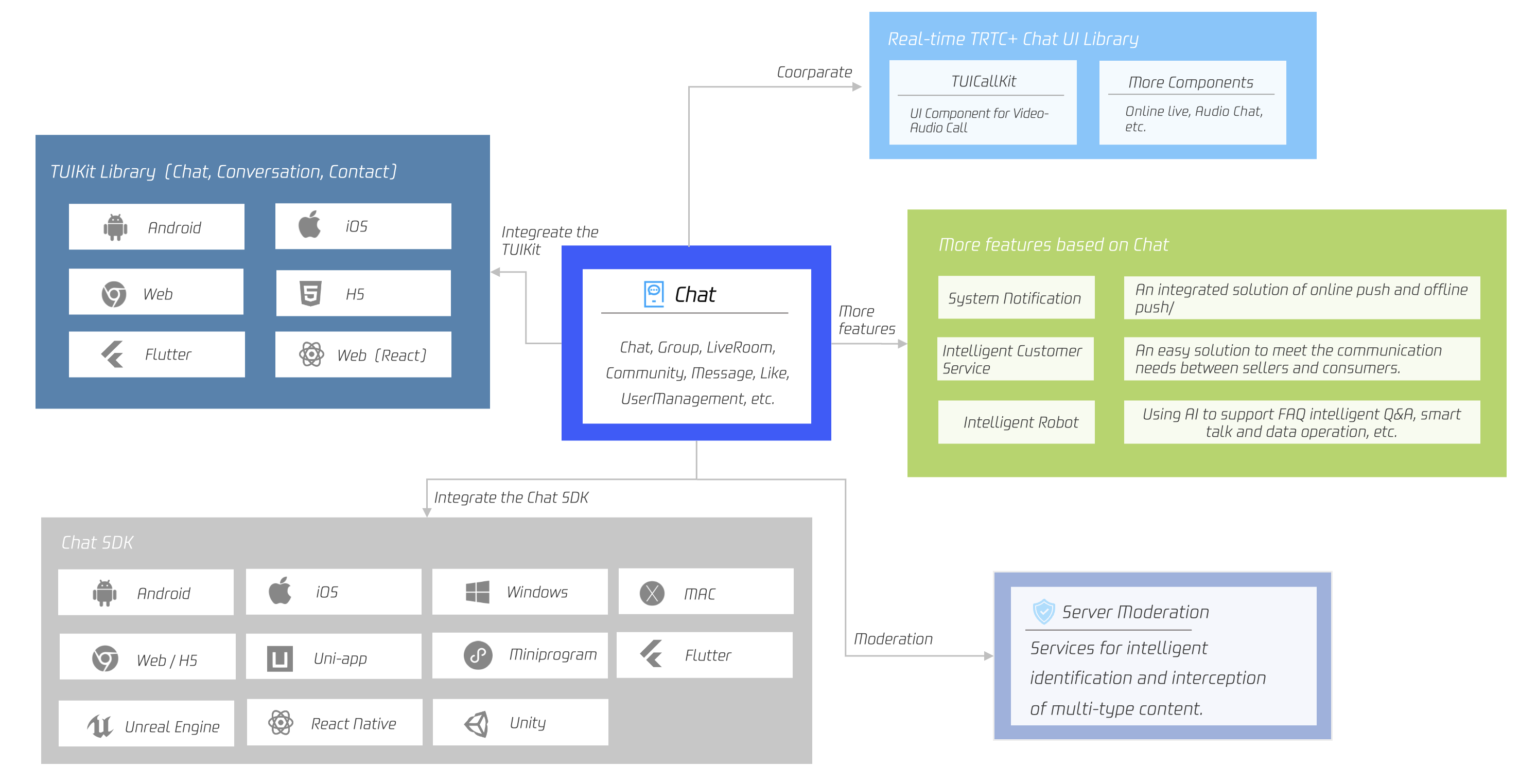
Chat also supports various features, such as cloud review, an integrated online/offline push solution, intelligent customer service, intelligent robots, etc.
You can get a general idea of Chat and its derived capabilities through the diagram below:


If you are accessing Chat for the first time, we recommend:
1. If you need a UI, you can choose from the UI components close to your business for a quick start, such as TUIKit and TUICallKit.
2. If you have already implemented your own UI and only need Chat capabilities, you can integrate the Chat SDK alone without UI.
Below, we will explain the access steps of different components in turn.

TUIKit

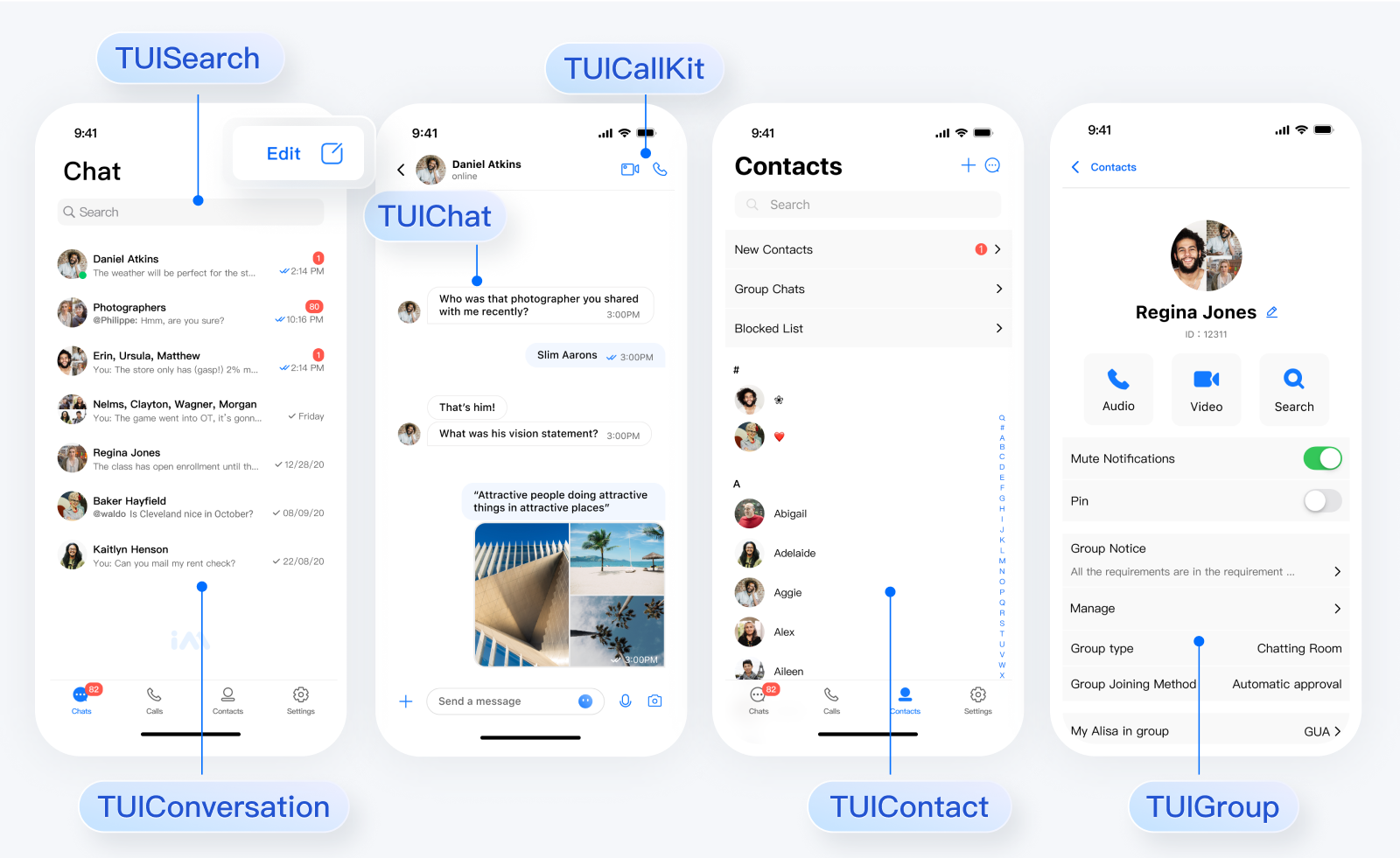
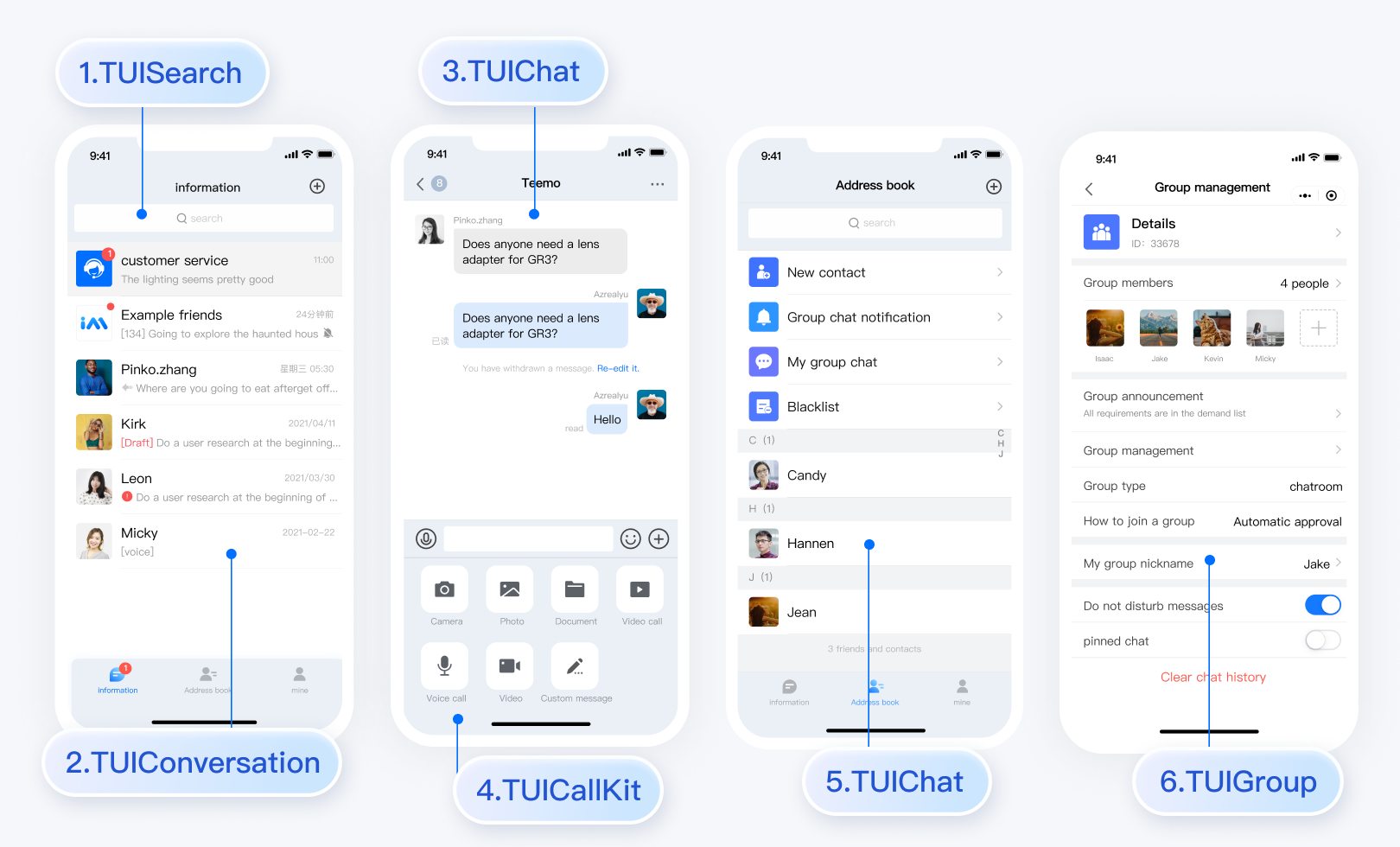
TUIKit is a UI component library based on Tencent Cloud Chat SDK. It offers a number of general-purpose UI components, including session, chat, search, relationship chain, group, and audio and video call features. You can use these components to quickly build your own business logic, similar to assembling blocks.
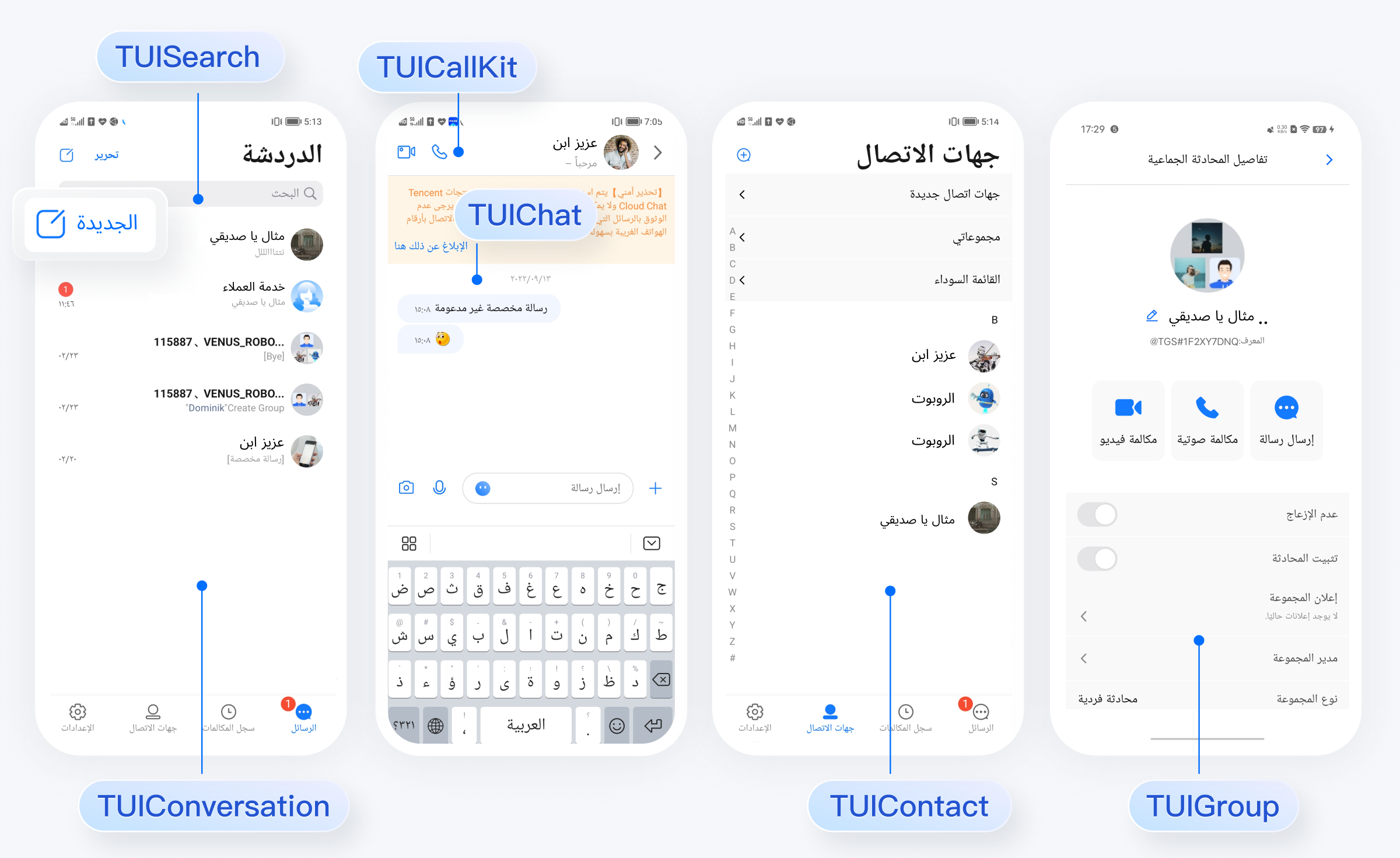
Taking the mobile app as an example, TUIKit offers 3 styles of interfaces:
Minimalist Edition, similar to the WhatsApp interface style.
Classic Edition, similar to the WeChat interface style.
RTL Language, supports Arabic, reading from right to left.
Classic Edition, similar to the WeChat style.
Minimalist Edition
RTL Language
Classic Edition


You can start by trying out the Demo:
Web
To get to know the code structure further, you can download the Demo source code and run it locally:
Android
iOS
Flutter
Unity
uni-app
Electron


If TUIKit meets your needs, you can begin integrating:
Android
iOS
Flutter
Unity
uni-app

Note:
After integration, you can explore more rich features in the document: TUIKit.

TUICallKit

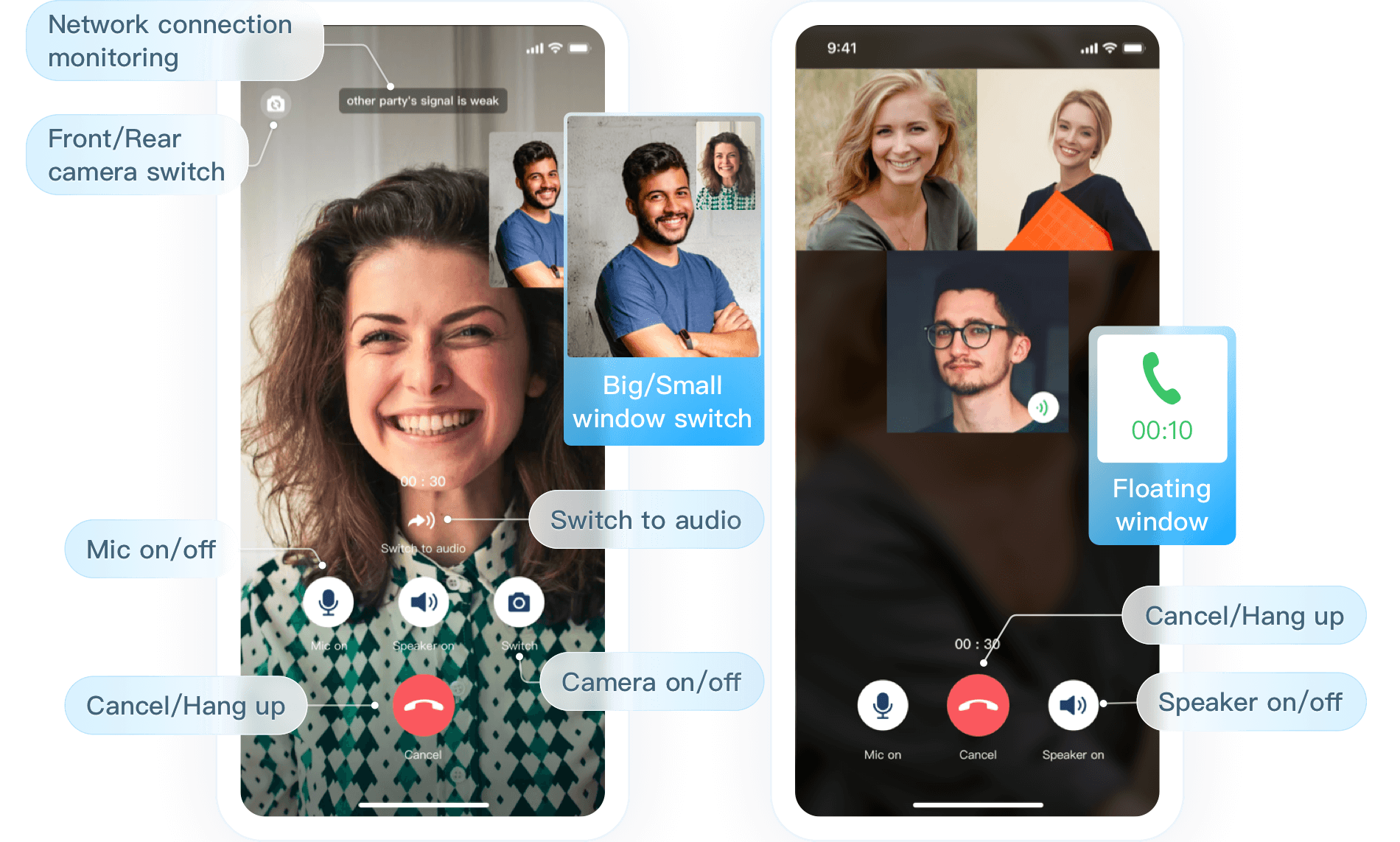
TUICallKit is an audio and video call UI component that uses the Chat SDK's signaling, chat, user status, and other features.
Taking mobile as an example, the main features of TUICallKit are shown in the following figure:

You can download the Demo source code and run it locally:
Android
iOS
Web
Flutter


If TUICallKit meets your needs, you can begin integrating:
Android
iOS
Web&H5
Flutter


Note:
After integration, you can explore more rich features in the document: TUICallKit.

SDK (Without UI)

If the above UI-inclusive products do not meet your needs, you can also directly integrate the Chat SDK that does not contain UI.
The integration process is very simple, you only need to perform 2 steps (initialize SDK and log in to the Chat account) to start sending and receiving messages:
You need to first integrate the Chat SDK:
Android
iOS
Web
Flutter
Windows
Mac
Unity
Next, initialize the Chat SDK as required:
Web
Flutter
Unity

Before using the Chat SDK feature, you need to log in to the account:
Web
Flutter
Unity

Note:
After login, more rich features can be explored in the document Chat SDK.


Help and Support

Was this page helpful?

Help us improve! Rate your documentation experience in 5 mins.

Feedback