The Cloud Streaming Services (CSS) console provides the Live Video Caster (LVC) service. This document describes how to configure and use the LVC and how to manage cloud streaming after activating the LVC service.
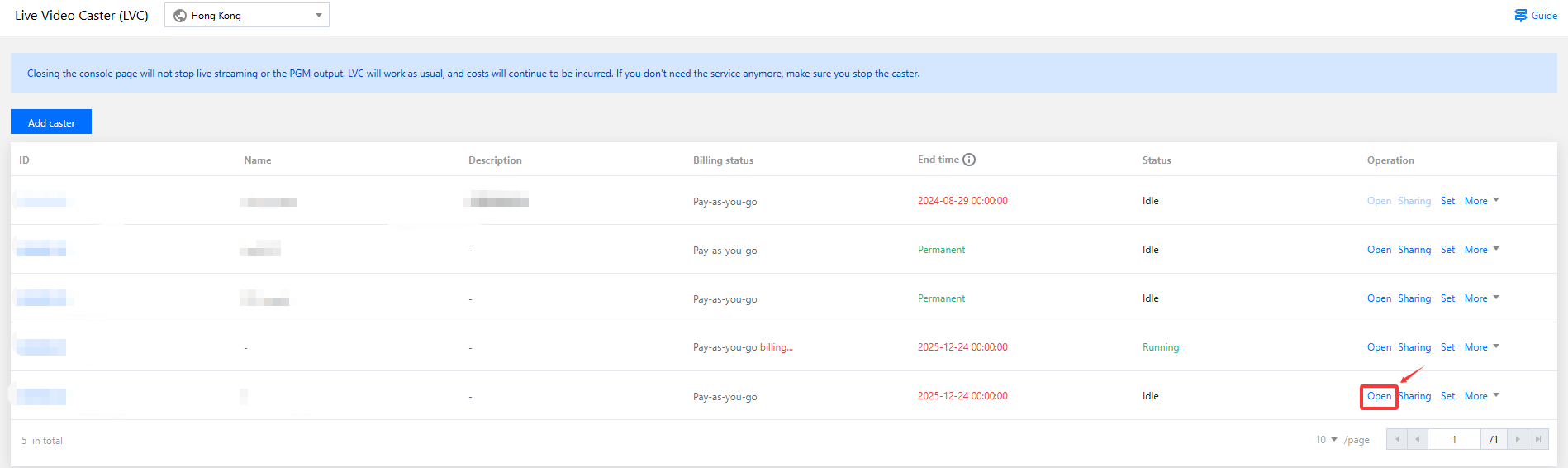
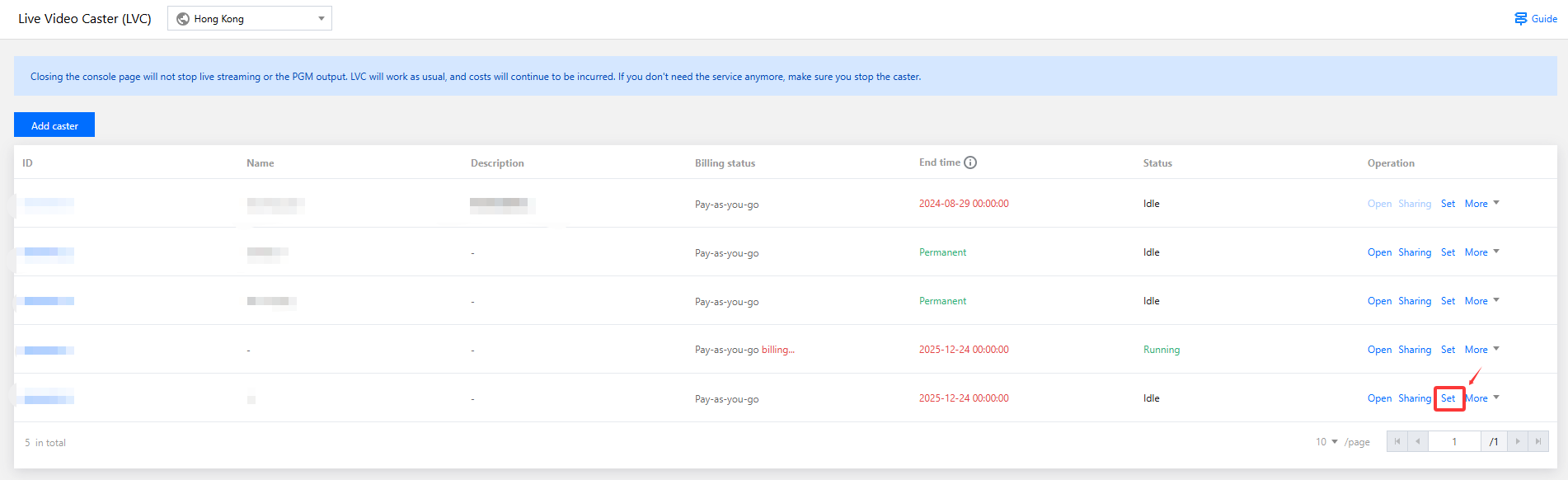
1. Log in to the CSS console, select Live Video Caster from the left-hand navigation pane.
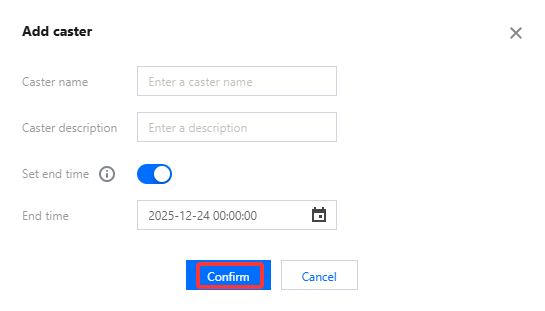
2. Click Add caster.
3. On the Add caster page, set the following parameters:
3.1 Caster name: Enter a custom name for the caster.
3.2 Caster description: Enter a description for the caster.
3.3 Set end time: Enabled by default.
3.4 End time: Select a time at which the caster will automatically stop.
Note:
The caster will stop at the set end time, and the preview, output, recording, and relay functions will all stop at that time.
If the end time setting is disabled, the caster will not automatically stop, which will incur unnecessary charges. In this case, you need to manually turn off the live streaming (PGM) to stop the billing.
Closing the console page will not stop the billing.
4. Click Confirm to complete the creation of the caster.
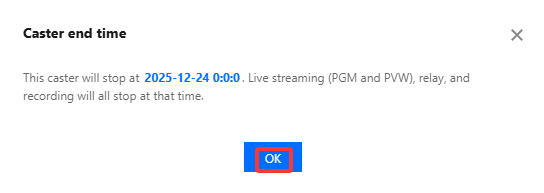
5. If the end time is set, a dialog box pops up asking for your confirmation. Click Confirm.
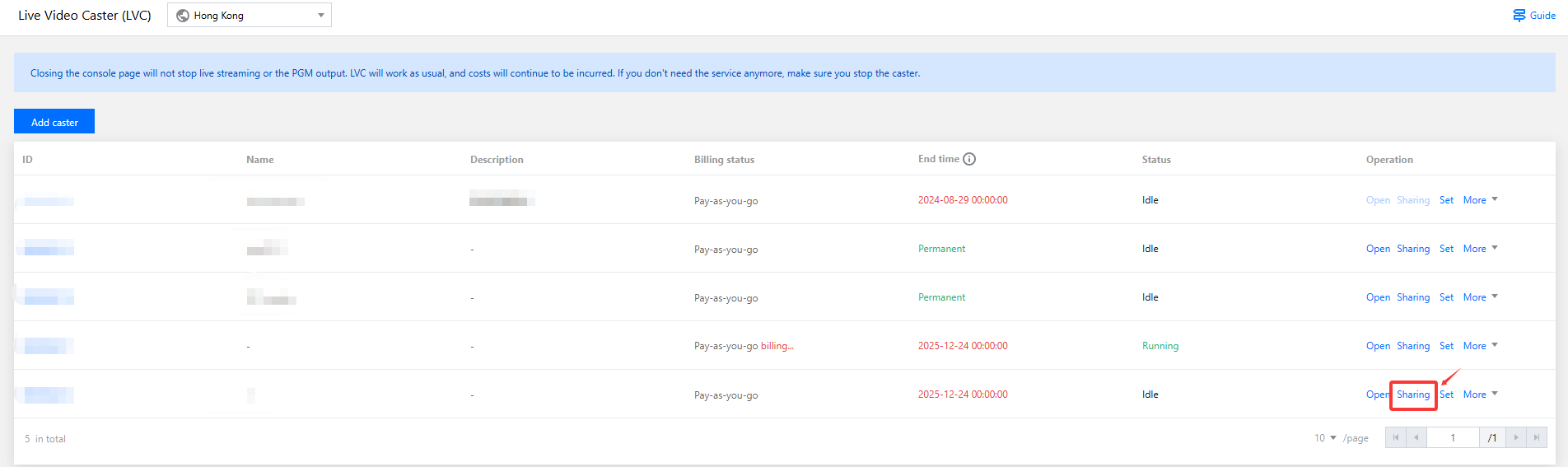
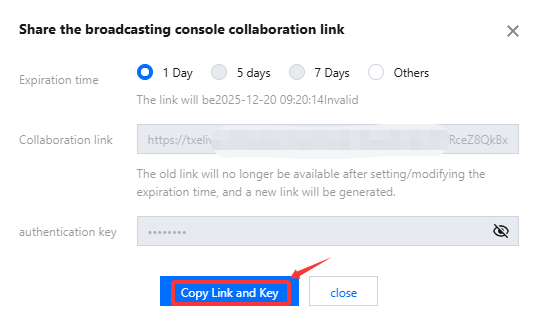
If you need to share the video caster with collaborators, you can click on Sharing in the corresponding director's console operation bar.
Video Caster Main User Perspective
Note:
Users who access the video caster via a shared link will not have their access privileges affected by the primary user.
The validity period of the video caster collaboration link is the same as the expiration time set when sharing.
Video Caster supports sharing (Share the broadcasting console collaboration link). Sharing is not possible if the video caster has exceeded its runtime.
Collaborator's perspective
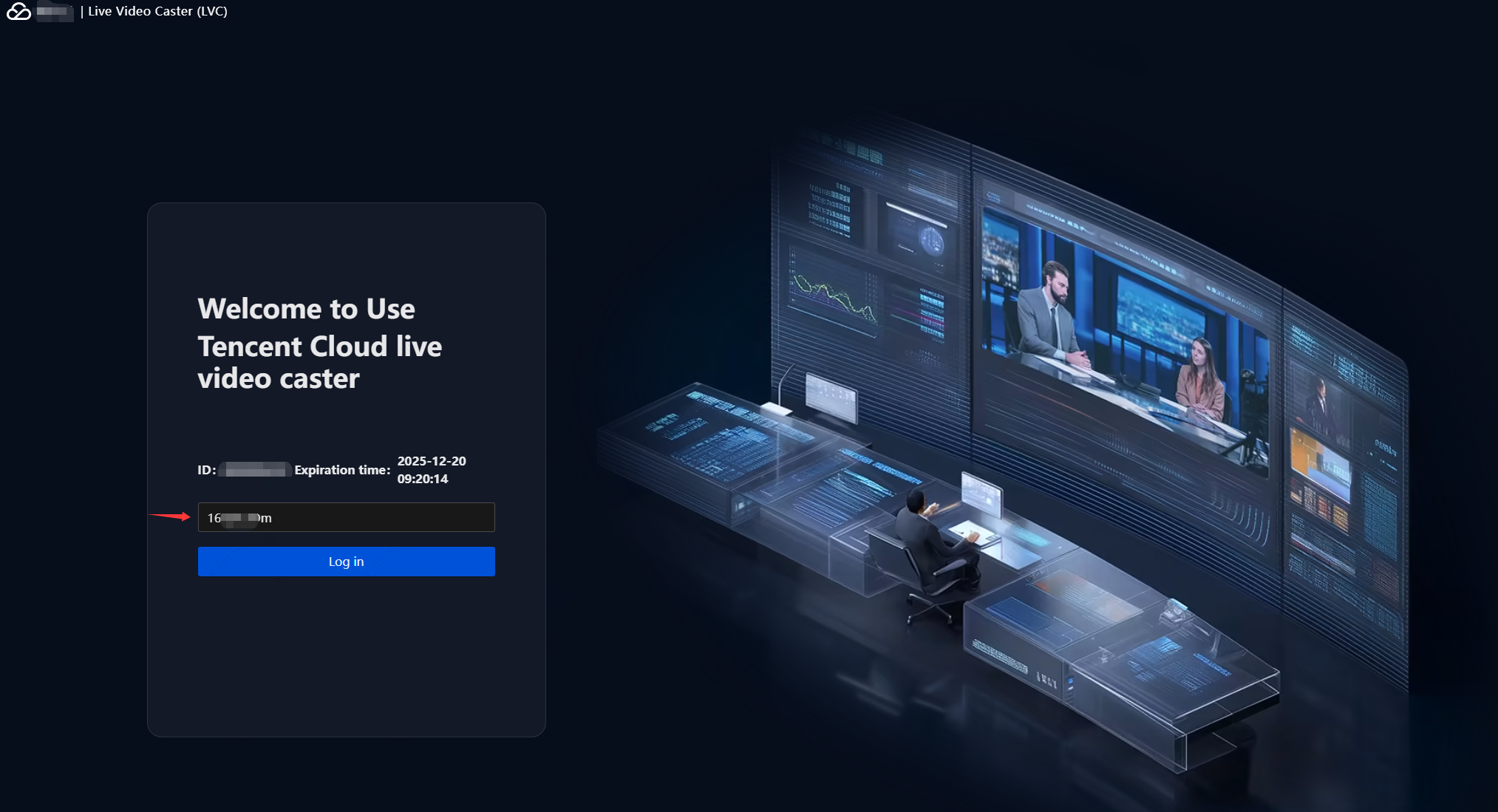
1. After receiving the shared link, collaborators can click it to enter the collaboration interface. Please enter your authentication key to log in.
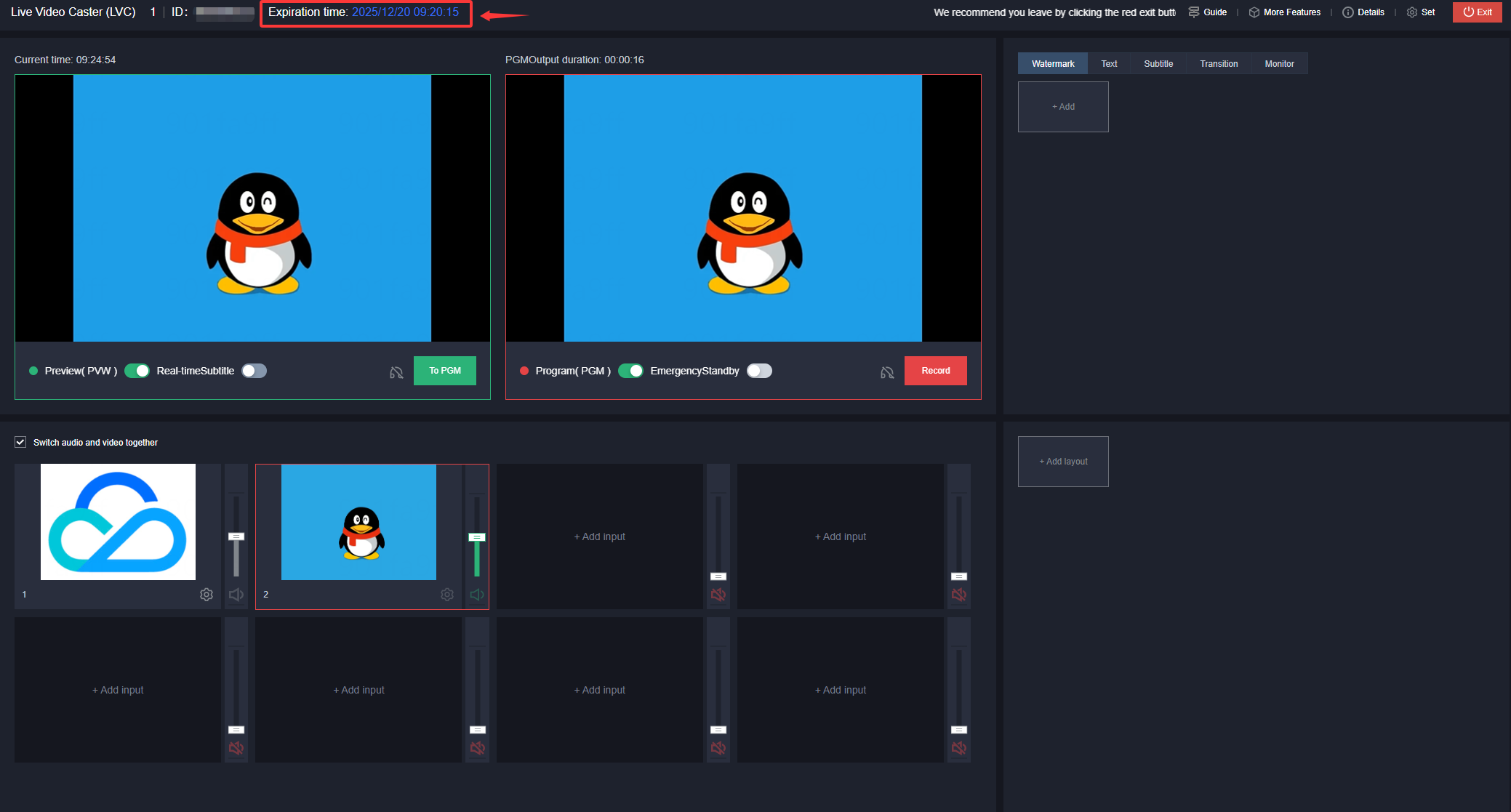
2. After logging in with their authentication key, collaborators will be directly taken to the video caster interface. You can view the link expiration time in the upper left corner of the interface.
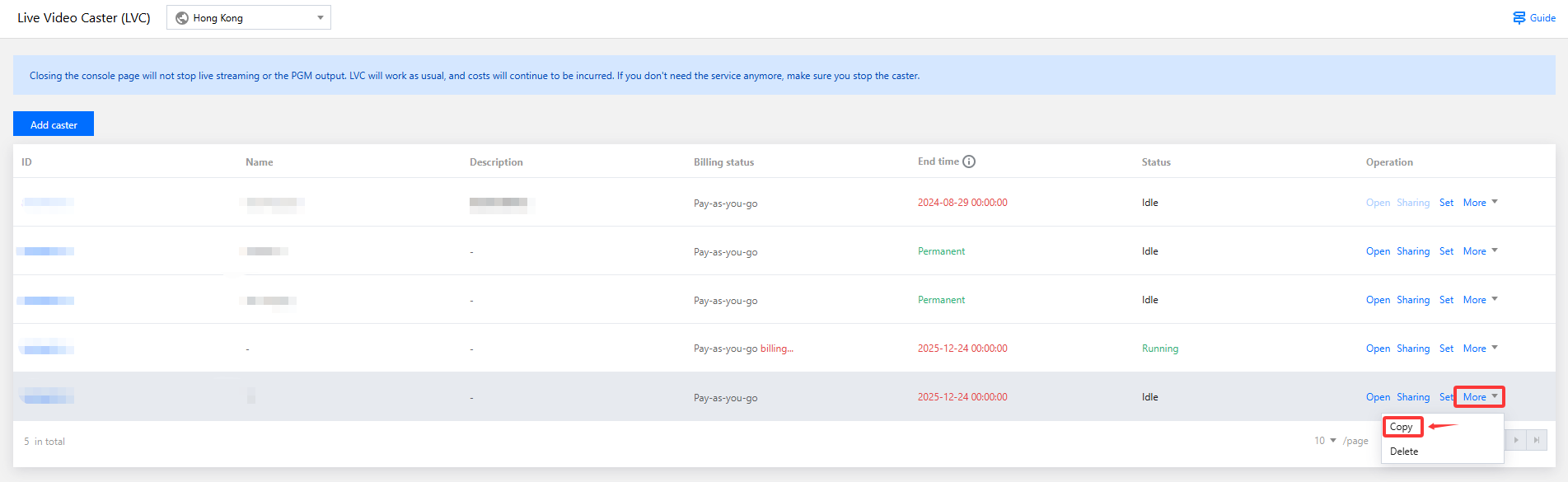
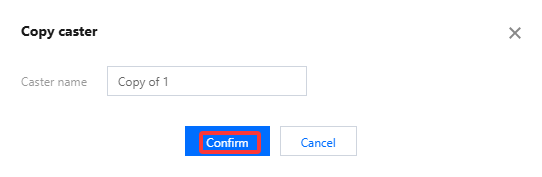
2. The default name of the copied caster is Copy of xx. You can customize the name of the caster. Click Confirm to complete the copy.
Stopping a Caster
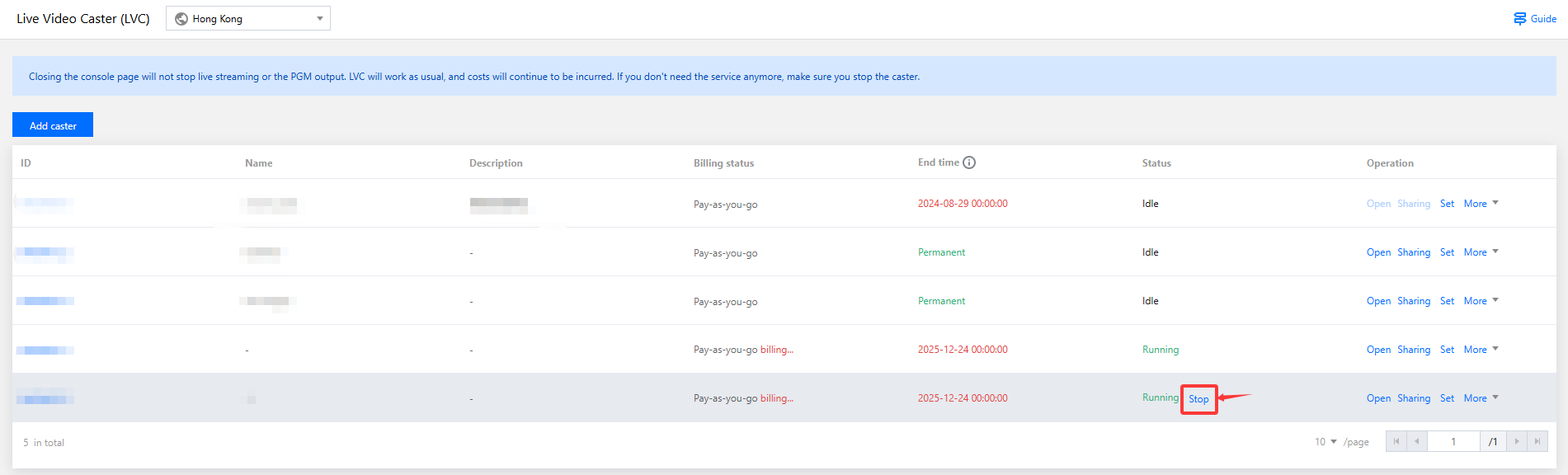
When you are finished using a caster, stop running it in a timely manner. When a caster is stopped, the preview, output, recording, and relay tasks will all stop, but all the LVC settings, including the input, layout, output, and relay settings, will be retained.
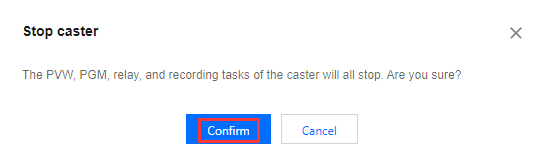
2. A dialog box pops up asking whether to stop running the caster. Click Confirm to stop the caster.
Note:
When a caster is stopped, its status changes from
to
and the billing stops.
Deleting a Caster
If you no longer wish to maintain a caster, you can delete it. Once a caster is deleted, all its configurations will be deleted, and its preview, output, recording, and relay tasks will stop.
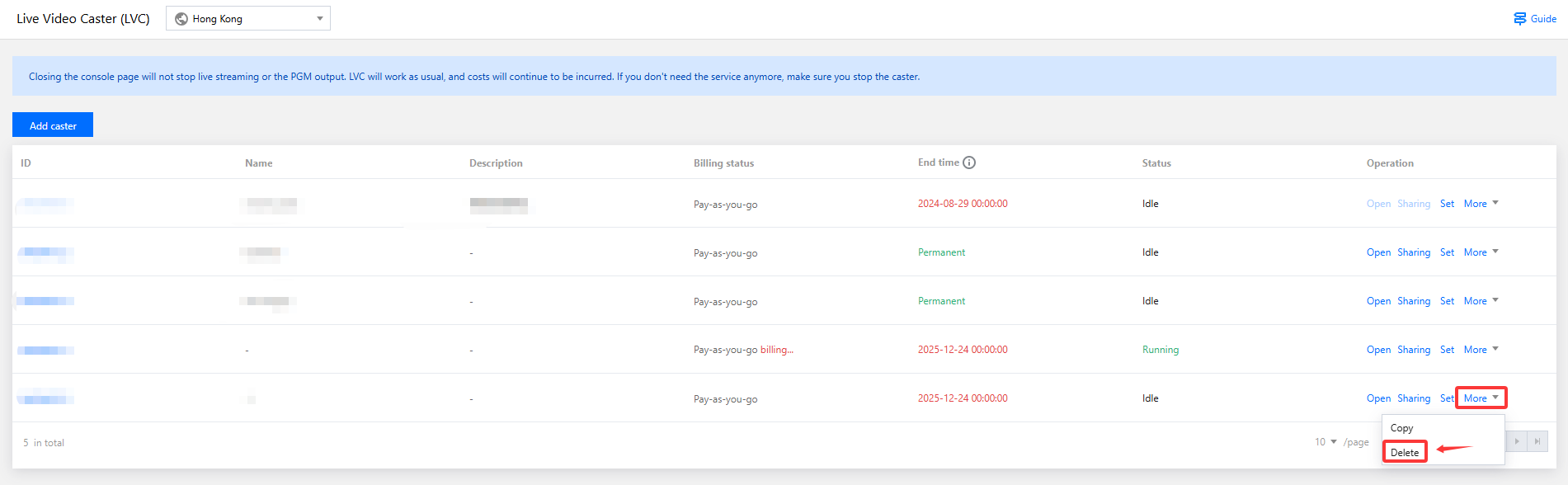
1. In the operation column of the caster you want to delete, choose More > Delete.
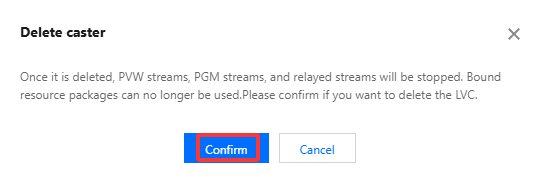
2. In the dialog box that pops up, click Confirm to delete the caster. The deleted caster is no longer included in the instance management page.