Terminal Security Control Scenarios
Unduh
Mode fokus
Ukuran font
How to Control Installation of Specific Software on Terminals?
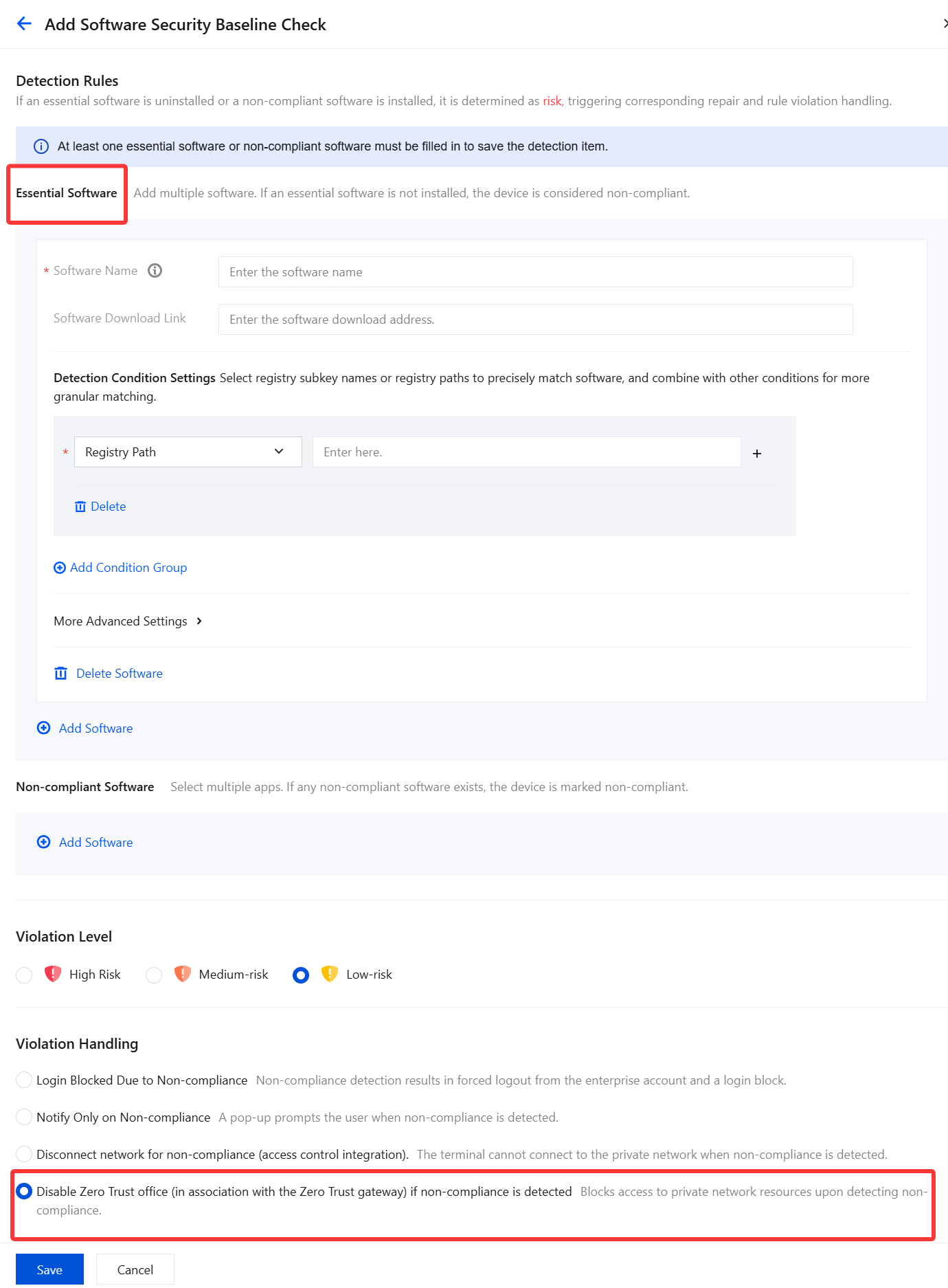
On the Terminal Management > Compliance Detection > Policy Configuration page, configure a software security baseline policy to check whether required software is installed on user terminals.
If you are using the premium edition, you can configure a rule to Disable Zero Trust office (in association with the Zero Trust gateway) if non-compliance is detected, This guides terminal users to install the specified software by restricting their access to business resources.
When Is Compliance Detection Triggered on Terminals?
Compliance detection can be triggered at startup, at identity login, at network switching, and at the scheduled inspection intervals configured by the administrator. The administrator can configure compliance detection scans to run at intervals as short as every 5 minutes.

Why Is a Terminal Control Policy Not Immediately Effective on Terminals After Being Configured?
1. After the policy is configured, it may take 2 to 4 minutes to be delivered to user terminals, so there may be some delay. You can click the blue number in the policy list to view the delivery status of the policy.

2. If user terminals persistently fail to receive policies or policies fail to take effect, use the diagnostic tool on the client to run diagnostics, package the logs, and contact us.
Can Terminal Control Policies Be Independent of Login or User Dimensions?
Terminal control policies are policy content that primarily takes effect on user terminals. They can be configured by terminal or by user.
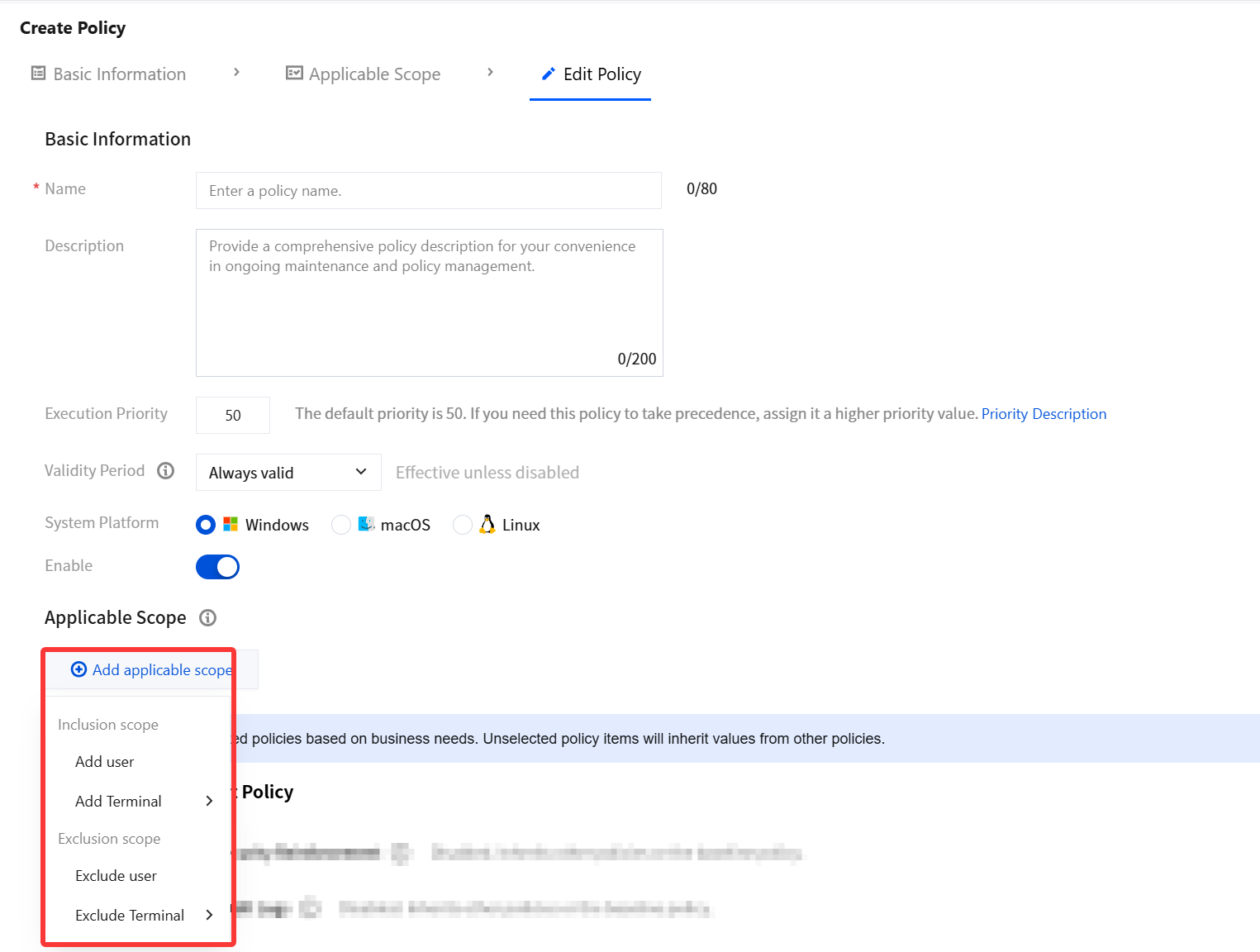
On the Create Policy page, when adding an applicable scope, select the policy distribution targets based on your organization's actual needs.
When distributed to terminals, the policy is assigned to specific terminals.
When distributed to users, the policy is delivered to the terminal where the user logs in based on their login behavior.
How Are the Virus Database and Vulnerability Database Updated for iOA?
The virus database and vulnerability database of iOA are continuously operated by professional Tencent security operators. Generally, the virus database is updated at least twice a week, and the vulnerability database is updated at least once a month. Terminals of enterprise customers automatically request updates to the latest cloud versions of the virus database and vulnerability database.
How to Configure an Allowlist for Files Exempted from Detection?
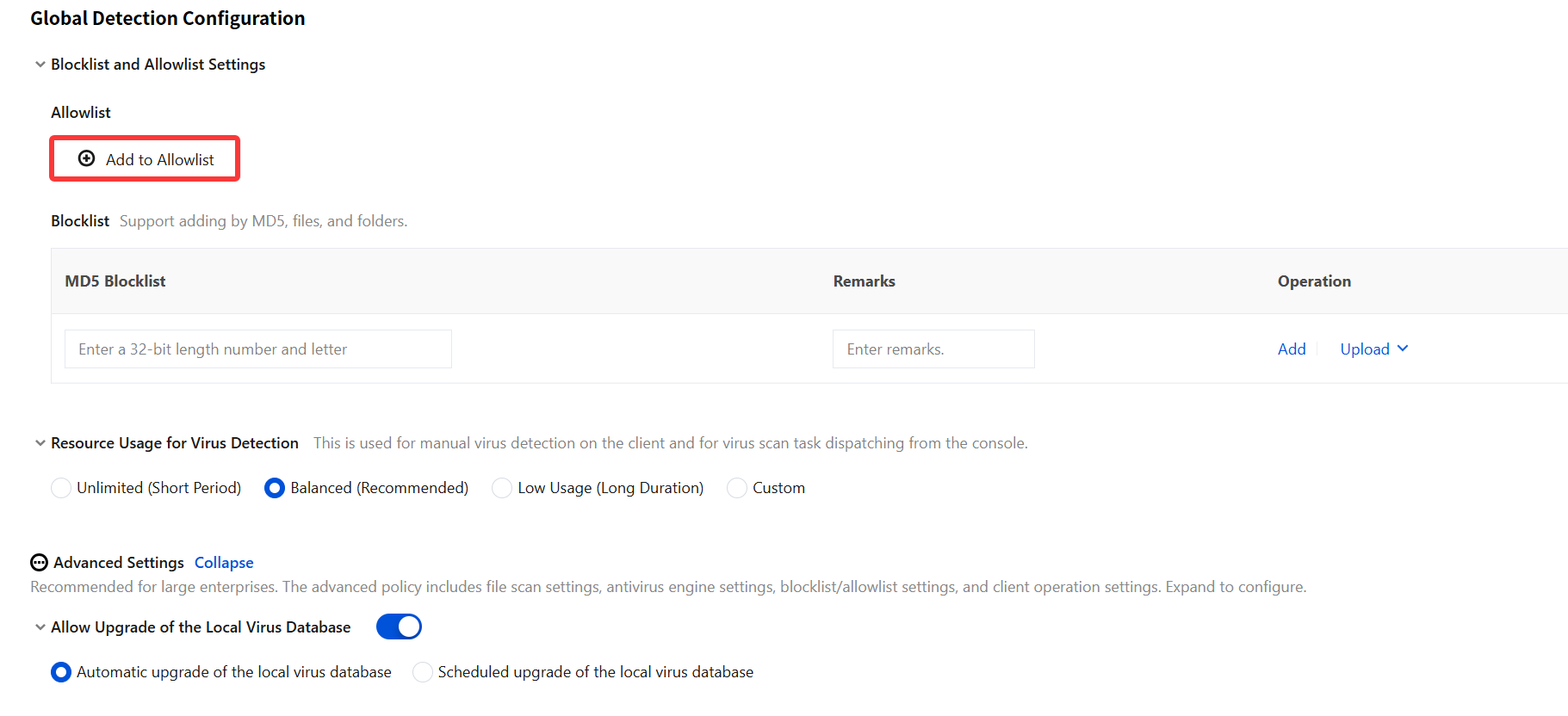
On the Virus Detection > Policy Configuration page, create a policy, select Apply Template or Do not Use Template, configure the allowlist in global detection settings, click Add to Allowlist, and add the corresponding files.
Bantuan dan Dukungan
Apakah halaman ini membantu?
Anda juga dapat Menghubungi Penjualan atau Mengirimkan Tiket untuk meminta bantuan.
masukan