Use Cases
Download
Focus Mode
Font Size
Centralized Credential Control
Scenario Pain Points: To ensure business development agility, systems often contain a large amount of sensitive information, such as account details, Tokens, certificates, SSH keys, and API keys. Therefore, unified lifecycle management of sensitive secrets, including storage, search, and usage, is required.
Scene Example: Lifecycle management of sensitive configuration secrets for multiple applications, including encrypted storage, query management.
Challenges Faced: Hardcoding of sensitive secrets, Disorganized permission management, and difficulties in managed secrets management.
Solution: Business developers can create, use, and store secrets for sensitive configuration information through the SSM console, SDK, or command-line interface. By integrating SSM with CAM and CloudAudit, business managers can achieve unified lifecycle management of enterprise secrets.
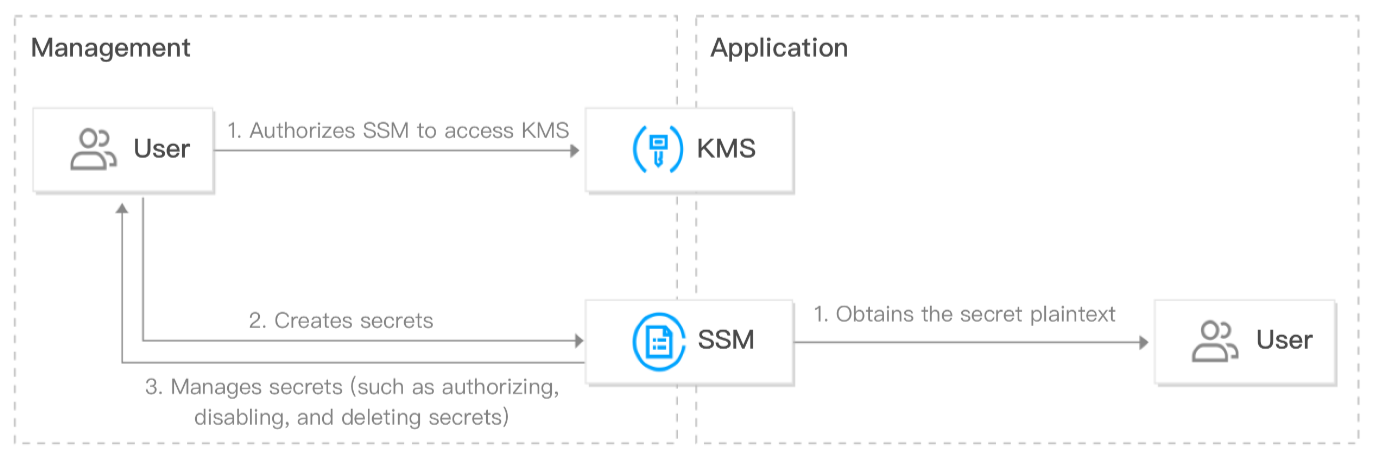
Sensitive Credential Retrieval and Management
Scenario Pain Points: When users access an application or service, they need to create authentication secrets, such as passwords, tokens, certificates, SSH keys, or API keys. These secrets are often embedded directly in plaintext within the application's configuration files, which poses a security risk. Using SSM can effectively mitigate risks like hardcoding sensitive secrets.
Scene Example: Database secrets, API keys, account passwords.
Challenges Faced: Exposure of sensitive secrets information.
Solution: Users can replace hardcoded secrets (including passwords) in the code with calls to the SSM API, allowing secrets to be queried dynamically through programming. As this process excludes sensitive information, it ensures that keys are not exposed.
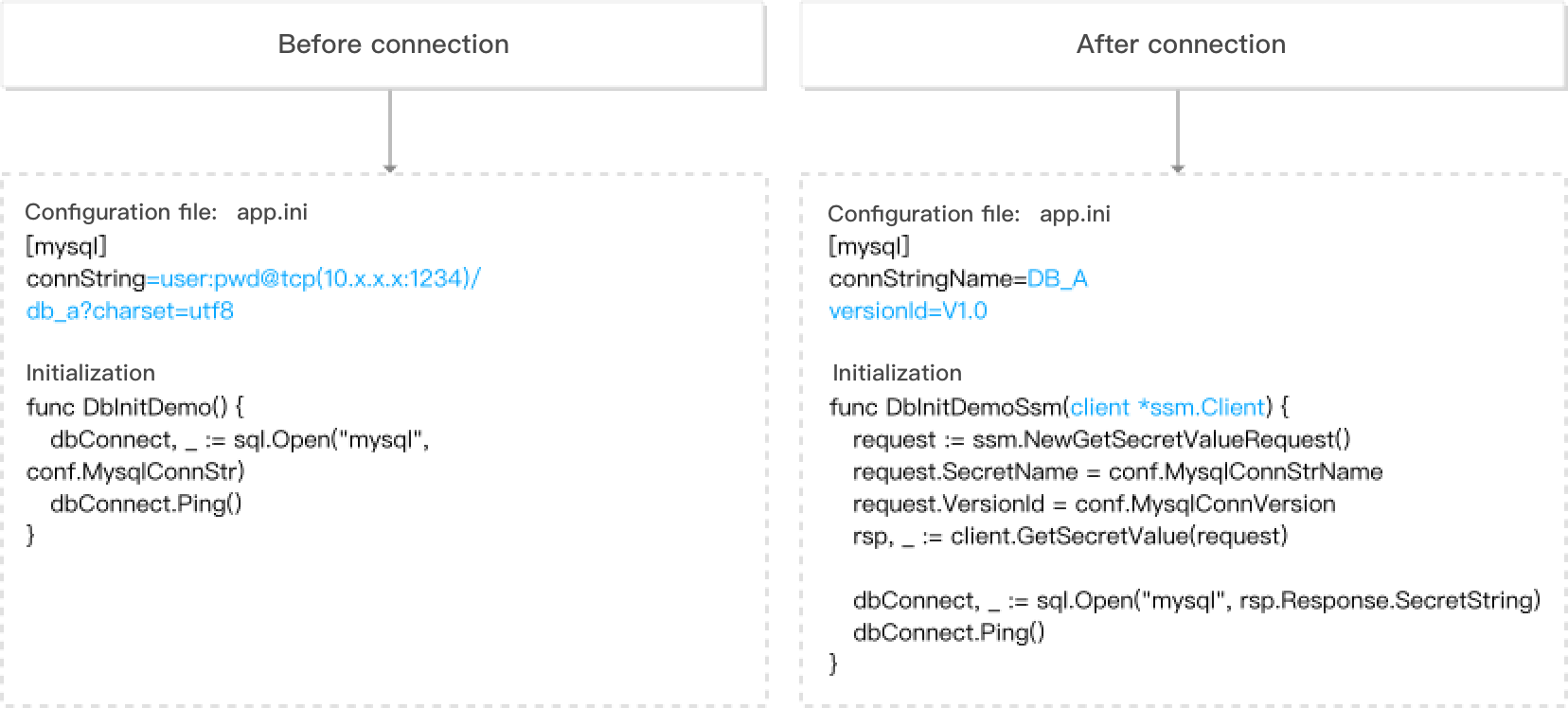
Secrets Rotation
Technical Pain Points: To enhance system security, it is necessary to periodically update sensitive secrets. This can be achieved through the SSM.
Scene Example: Application layer secrets rotation.
Challenges Faced: Secrets rotation requires dependent applications or configurations to be updated synchronously. Updating secrets across multiple application systems is prone to oversight, which can lead to application downtime.
Solution: In SSM, users can add a new secret version through the console or update target secret content by calling the API. They can then independently choose to perform a full or canary rotation of the secret, achieving synchronous updates for all application points that depend on the target secret.
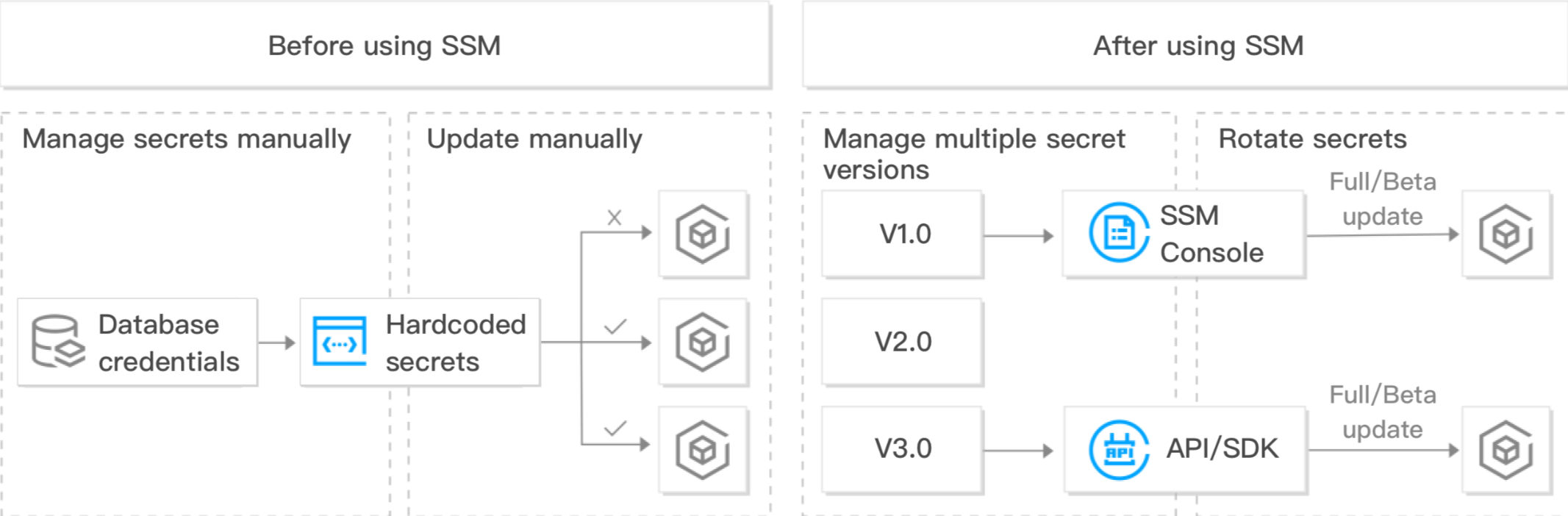
Help and Support
Was this page helpful?
You can also Contact sales or Submit a Ticket for help.
Help us improve! Rate your documentation experience in 5 mins.
Feedback