Alarm
Download
Focus Mode
Font Size
The database risk monitoring alarm module enables precise identification and closed-loop handling of violations through real-time monitoring of and response to security events on database assets. This document describes the alarm capabilities of Data Security Audit.
Viewing the Alarm List
1. Log in to the TencentDB for SQL Server console.
2. Select DSAudit in the left sidebar.
3. On the DSAudit page, click Alarm.

4. On the Alarm Tag page, you can view the alarm information of the current database assets, including Alarm Name/Type, Threat Level, Instance ID/Name, Database Account, Detection Time, and Processing Status.
Viewing Alarm Details
On the Alarm Tag page, click the name of the target alarm to view its details.
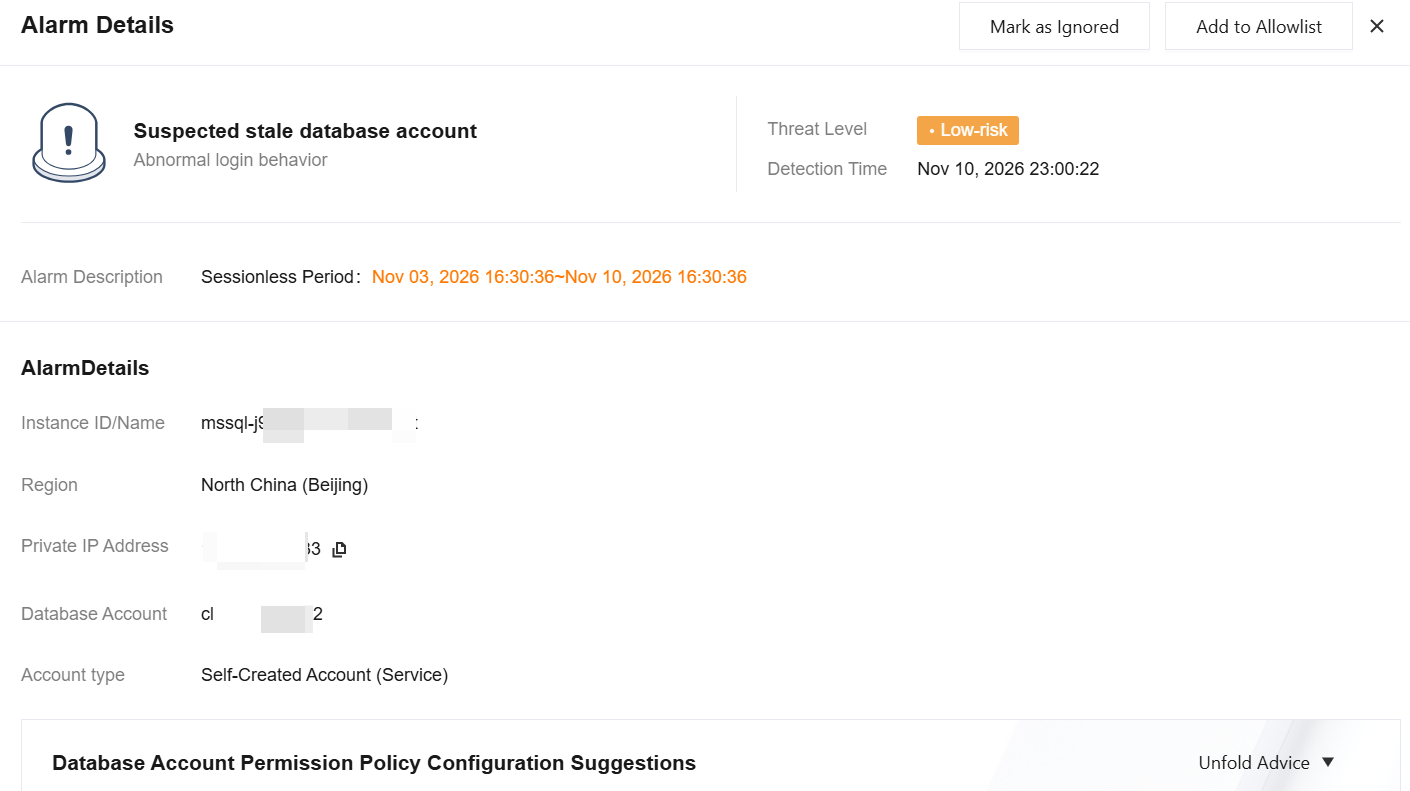
Alarm Handling Operations
Marking as Ignored
Mark the status of false positive alarms or alarms that do not require handling to eliminate interference in risk statistics.
Note:
If the alarm processing status is marked as ignored, the risk will not be included in risk statistics.
1. On the Alarm Tag page, you can handle target alarms individually or in batches.
To handle a single alarm, click Mark as Ignored in the operation column of the target alarm.

To handle alarms in batches, select multiple target alarms and click Mark as Ignored.
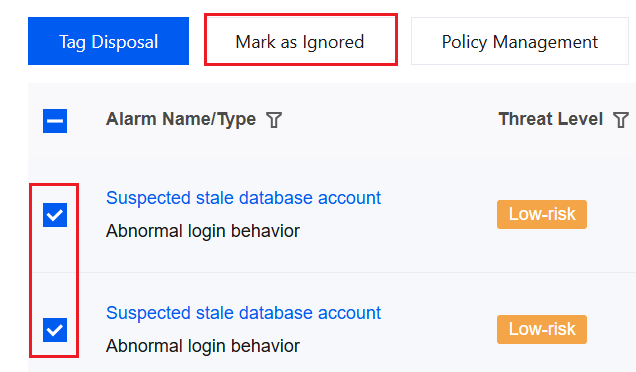
2. In the pop-up window, click OK to mark the alarm as ignored.
Adding Allowlists
Note:
After the alarm allowlist policy takes effect, the behavior will no longer trigger alarms.
For behaviors that require long-term permission, you can add the policy triggered by the alarm to the rule allowlist.
1. On the Alarm Tag page, click Add to Allowlist in the operation column of the target alarm.

2. In the pop-up window, review the allowlist policy content. After confirming that it is correct, click OK to add the policy information triggered by the alarm to the allowlist.
Processing marks
Note:
After the alarm processing status is marked as processed, the alarm will not be included in risk statistics.
Update the status of alarms for which emergency response has been completed to close the handling loop.
1. On the Alarm Tag page, select one or more target alarms and click Tag Disposal.
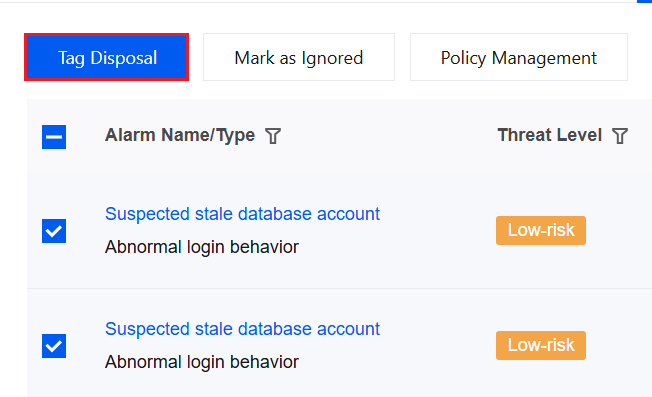
2. In the pop-up window, review the alarm information. After confirming that it is correct, click OK to mark the alarm as handled.
Alarm Policy Configuration
1. Log in to the TencentDB for SQL Server console.
2. Select DSAudit in the left sidebar.
3. On the DSAudit page, click Policy Management in the upper-right corner.

4. In the pop-up window, click Alarm Policy.
5. On the Alarm Policy Tag page, all built-in preset alarm policies are displayed. You can enable/disable alarm policies and adjust their threat levels on this page.
Enabling or Disabling Alarm Policies
On the Alarm Policy Tag page, select the target alarm policy and click the switch in the Policy Switch column to enable or disable the alarm policy.
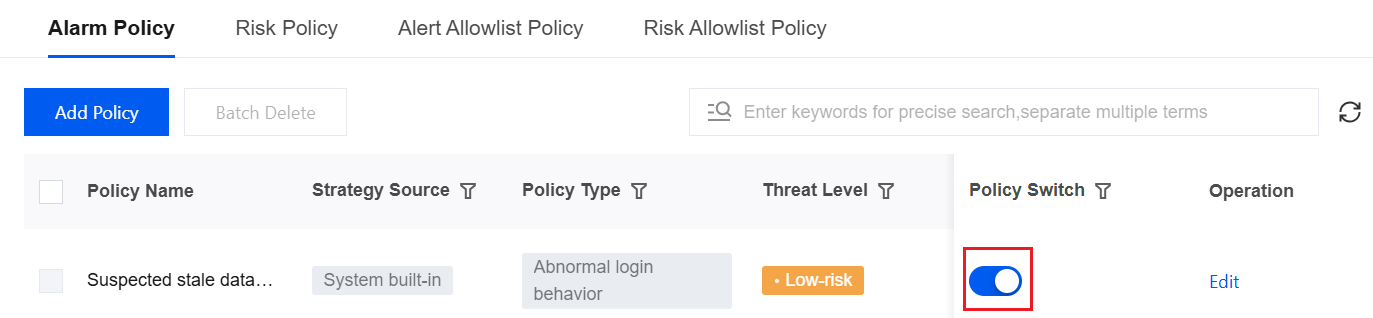
Editing Alarm Policies
1. On the Alarm Policy Tag page, select the target alarm policy and click Edit in the operation column.
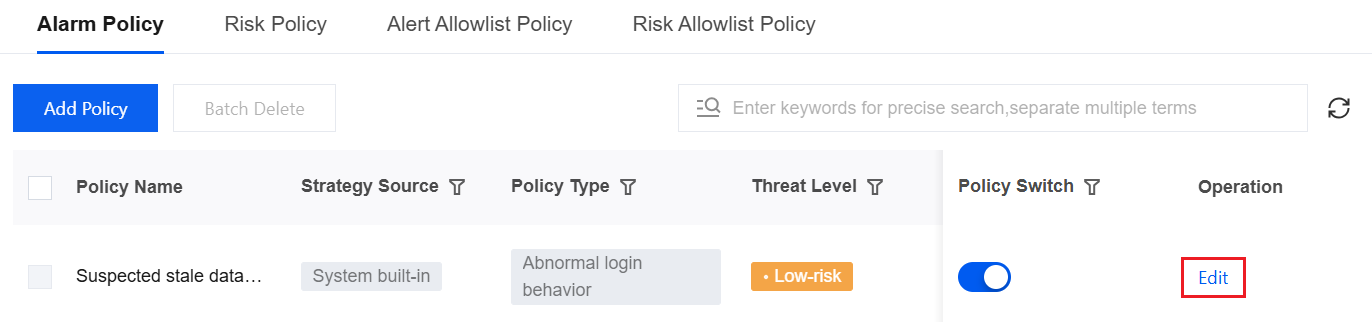
2. In the pop-up window, you can modify Threat Level and Policy Content (non-service accounts).
Alarm Allowlist Management
1. In the Policy Management window, click Alarm Allowlist Policy.
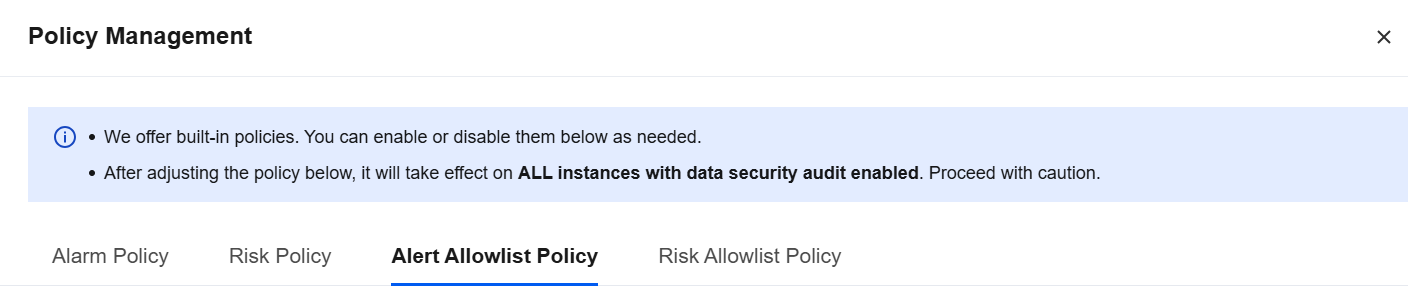
2. On the Alarm Allowlist Policy Tag page, all added alarm allowlist policies are displayed. You can regularly view the allowlist, click Edit to modify rules, or click Delete to invalidate the corresponding policy.
Help and Support
Was this page helpful?
You can also Contact sales or Submit a Ticket for help.
Help us improve! Rate your documentation experience in 5 mins.
Feedback