You can view the fees incurred by the use of COS under your account in the Billing Center in the Tencent Cloud console.
Note:
COS bills are settled in the order of free tier > pay-as-you-go billing.
By default, the system uses the pay-as-you-go method for billing settlement. For accounts that have free tier resource packs, the free tier resource pack is deducted first, followed by pay-as-you-go billing.
When a resource pack is purchased, the system first deducts from the free tier resource pack and the purchased resource pack during the pack's validity period. The remaining usage that exceeds the free tier and purchased resource packs is settled using the pay-as-you-go method, and the corresponding amount is deducted from your account.
For more information on the free tier and billable items, see Free Tier and Billing Overview respectively.
Viewing Bills by Instance/Bill Details
You can view bills by instance and bill details in the Billing Center in the console.
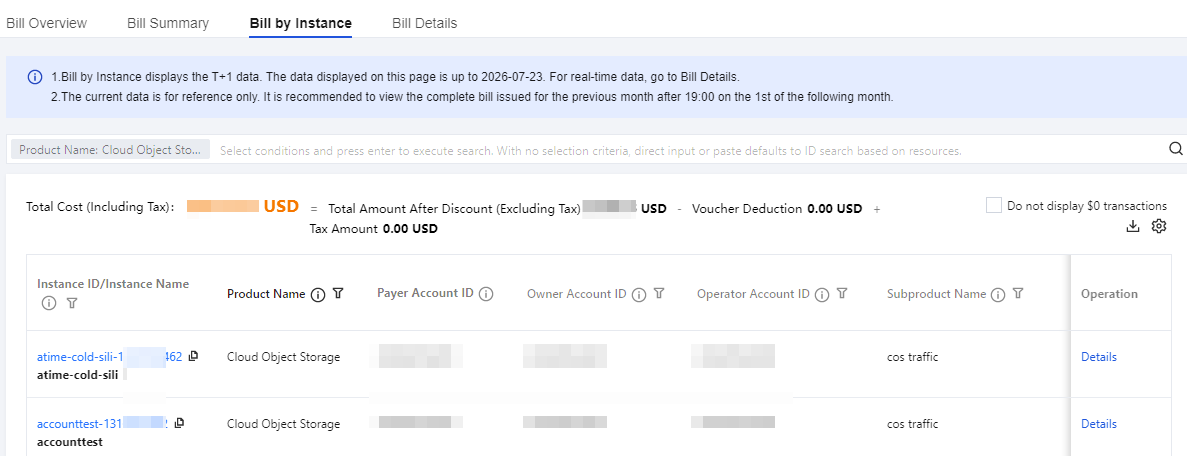
Bill by instance: It displays the bill amount by resource ID, which is the same as the bill by instance (L2) file. For more information, see Bill Management.
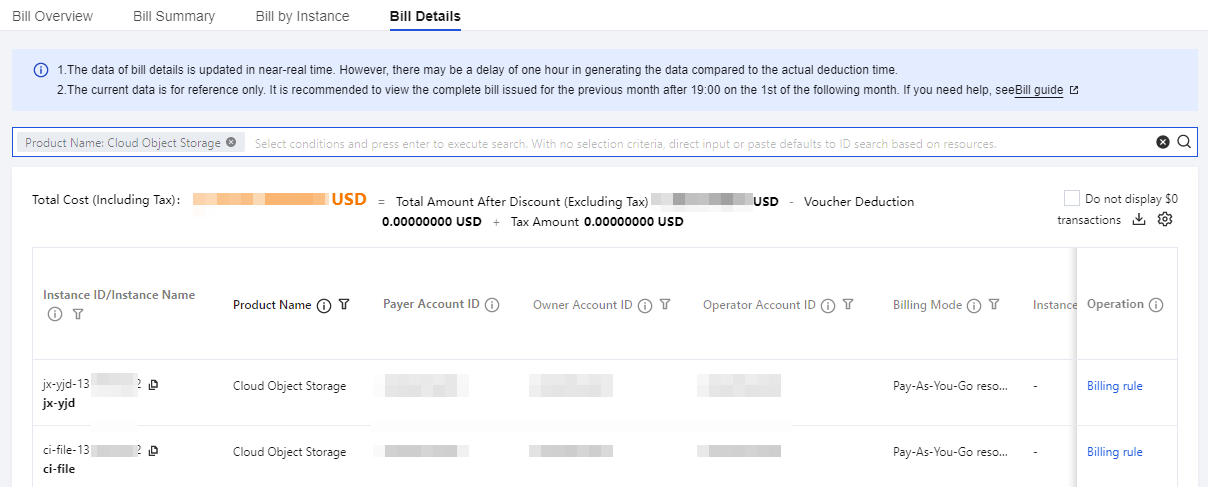
Bill details: Detailed records are not aggregated, and each fee entry is a detailed record. The details are the same as those in the bill details (L3) file. For more information, see Bill Management.
2. Click Billing Center in the top-right corner to enter the Billing Center overview page.
3. On the left sidebar, click Bills > Bill Details to view the bills by instance and bill details under the current account.
Note:
Select Bill Overview to view the billing trends and summary.
4. On the Bill by Instance tab, select Cloud Object Storage from the drop-down list to view your COS usage by region, billing mode, transaction type, etc. If you select Hide 0 USD Items, the Billing Center will automatically hide the bills of 0 USD items.
5. Click the Detailed Bill tab page. In the search box, select to filter by product name COS to display each of your consumption details, with fees not aggregated.
Note:
To query the usage details of each billable item by bucket and cost allocation by bucket or region, click Usage Details Download on the left sidebar to download the COS usage details report.
Currently, COS supports billing by bucket, which is made available through an allowlist. If your account is in the allowlist, you can see that fees are displayed by bucket name as the resource ID in bills by instance and bill details.
The configuration options are as described below:
Region: Select different regions in the region drop-down list to view the bill details by region.
Billing Mode: Select different billing modes in the billing mode drop-down list to view the bill details under pay-as-you-go billing mode.
Transaction Type: Select different transaction types in the transaction type drop-down list to view the bill details by pay-as-you-go purchase.
Downloading Bill
You can download the billing statements you need from the Bill Export Center. The currently available bill types for download include L0-PDF bills, L1-multi-dimensional summary bills, L2-resource bills, and L3-detailed bills. To download business usage detail bills, go to Usage Detail Export.
2. In the left sidebar, click Resource Pack Management > Purchased Resource Packs / Free Tier Resource Packs to go to the Resource Pack Management page.
3. Locate the resource pack whose usage you want to view, and then click View Details on its right.
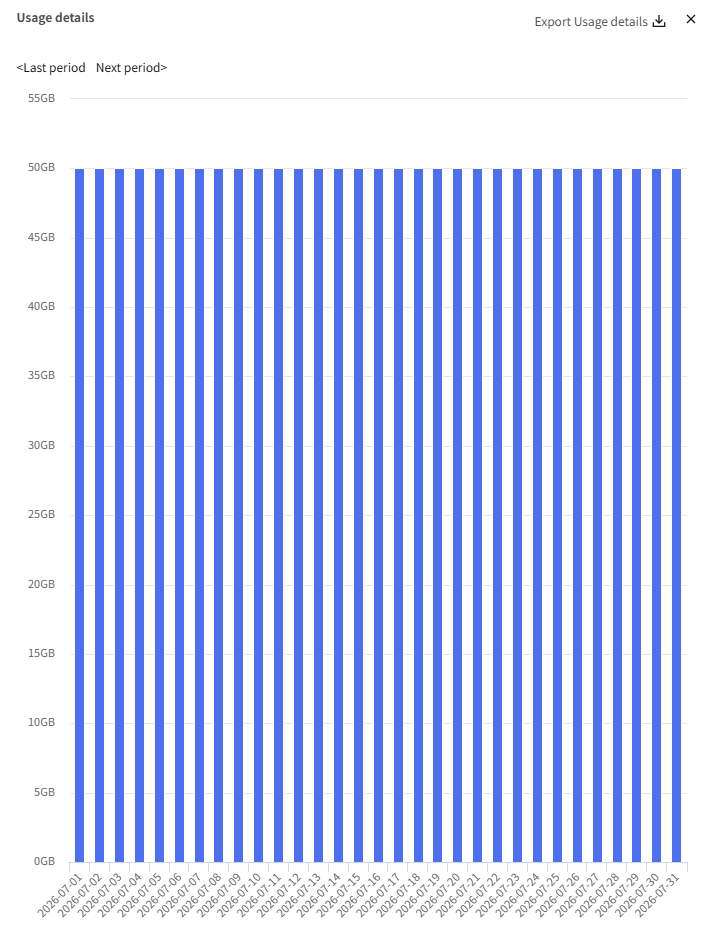
4. In the pop-up window, you can select the previous or next period to view the daily usage of the resource pack. Click Export Usage details in the upper-right corner to export all historical usage details of the resource pack.