Use Cases
Download
Focus Mode
Font Size
Full-Scenario High Availability Architecture
Business Pain Points | Provided Capabilities | Recommended Pairing Capabilities |
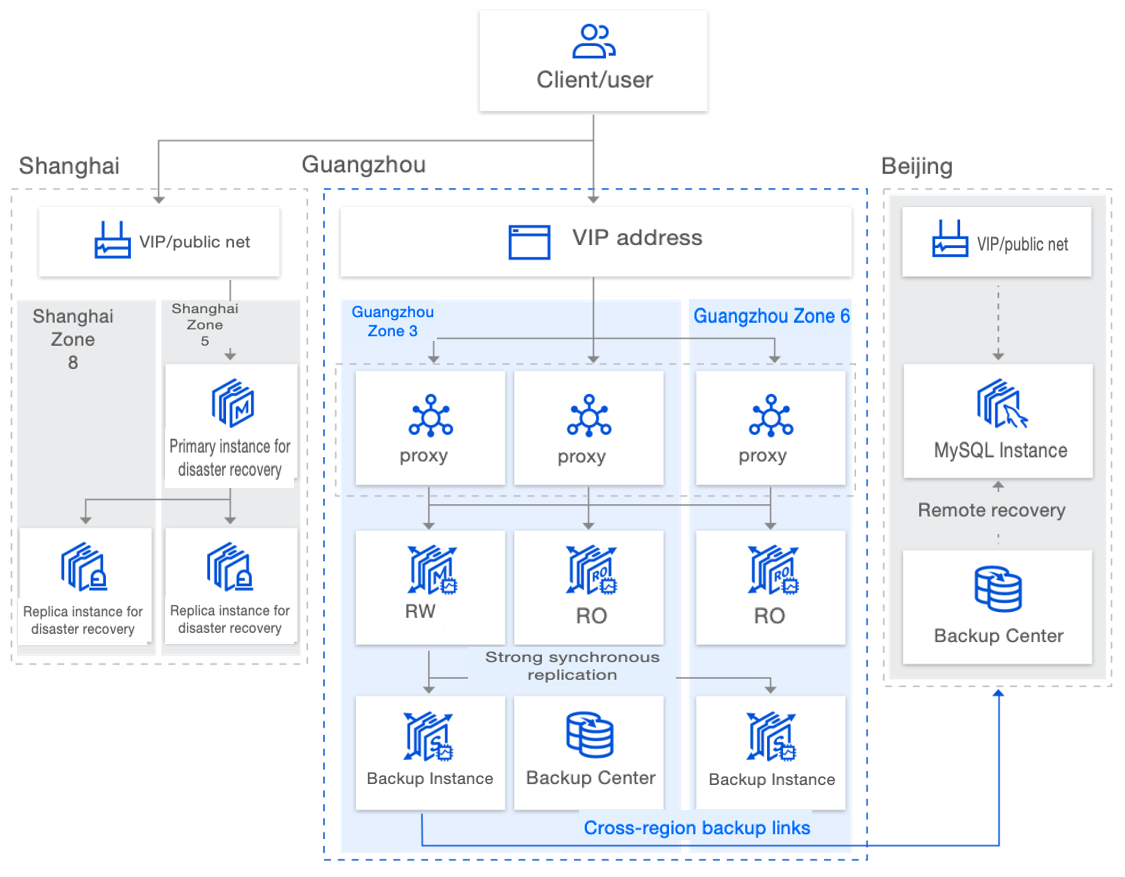
Databases play a vital role in the core businesses of an enterprise. Data is the basic resource and lifeline of the enterprise. Therefore, to ensure stable production and operation of the enterprise, a highly available database architecture is indispensable. Issues such as database downtime, data loss, and unavailability have a significant impact on enterprises and can cause economic losses. Therefore, TencentDB for MySQL launches the All-Scenario High Availability Architecture (AS-HAA) to ensure stable business operations in all aspects and throughout the entire process. | High stability Automatic elastic scaling. Nearby access. Low network latency. High availability Full-component cross-AZ/cross-region deployment. High data processing performance and response speed. High fault diagnosis and recovery efficiency. | |
| | |
| | |
| | |
| | |
Gaming Scenarios
Business Pain Points | Provided Capabilities | Recommended Pairing Capabilities |
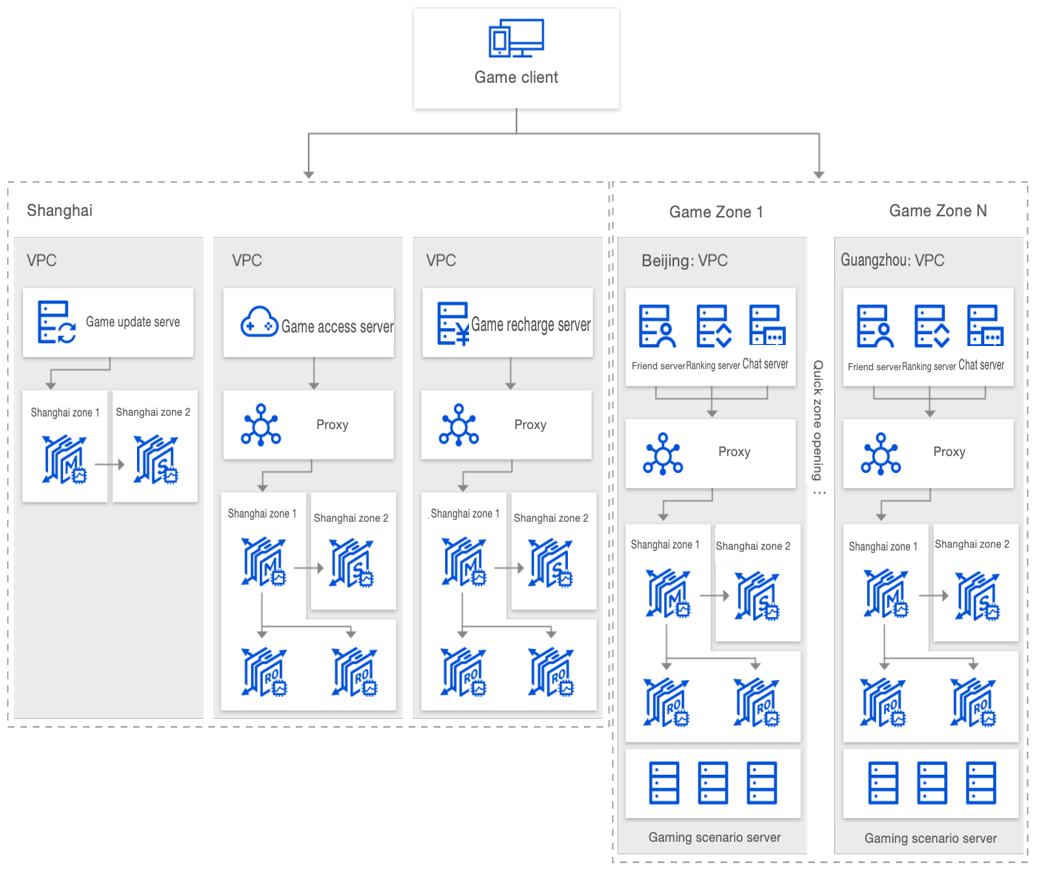
Gaming scenarios are characterized by long online duration, relatively long lifecycle of game business, prevalence of the regional server, large numbers of data records, and high requirements for low latency. At the same time, gaming businesses demand extremely high availability to avoid exceptions such as game server downtime and data loss. Rollback operations are very important in gaming businesses, requiring a balance between efficiency and integrity while minimizing the impact on users. | High performance Auto scaling of computing resources. Minute-level deployment of partitioned databases. Rollback to any time point. High availability Fully automated imperceptible disaster recovery switch. | |
| | |
| | |
| | |
| | |
E-commerce Scenarios
Business Pain Points | Provided Capabilities | Recommended Pairing Capabilities |
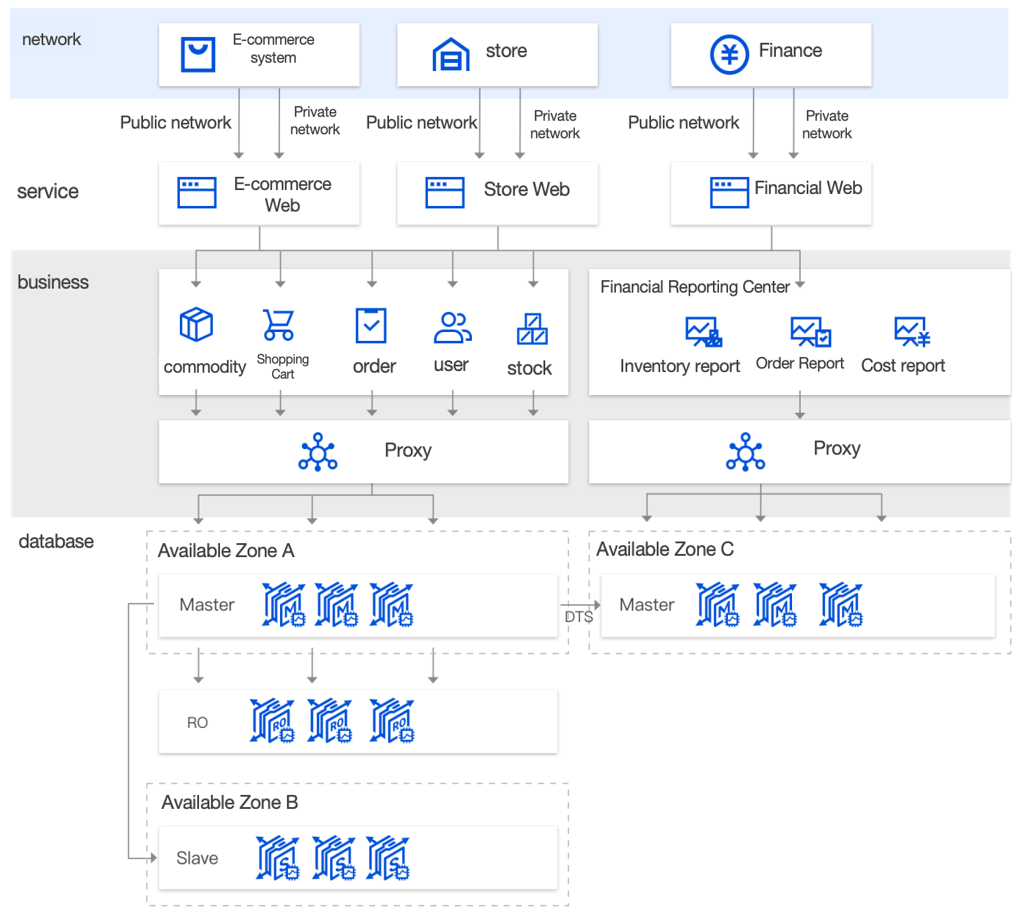
In e-commerce scenarios, sudden traffic peaks can cause extreme pressure on server load, requiring high scalability and flexibility in database architecture. At the same time, high-concurrency access to hotspot data needs support from a high-performance, high-availability architecture. Moreover, e-commerce businesses often involve large data volumes, with performance requirements for multi-table join queries and relatively high real-time requirements. | High performance Addressing the performance bottleneck of hotspot data high concurrency. Rapid elastic scaling for sudden business peaks. High availability Strong data consistency. Reducing the loss caused by single point of failure. High security Effective prevention of malicious attacks, data leakage, or security risks caused by improper human operations. | |
| | |
| | |
| | |
| | |
Financial Scenarios
Business Pain Points | Provided Capabilities | Recommended Pairing Capabilities |
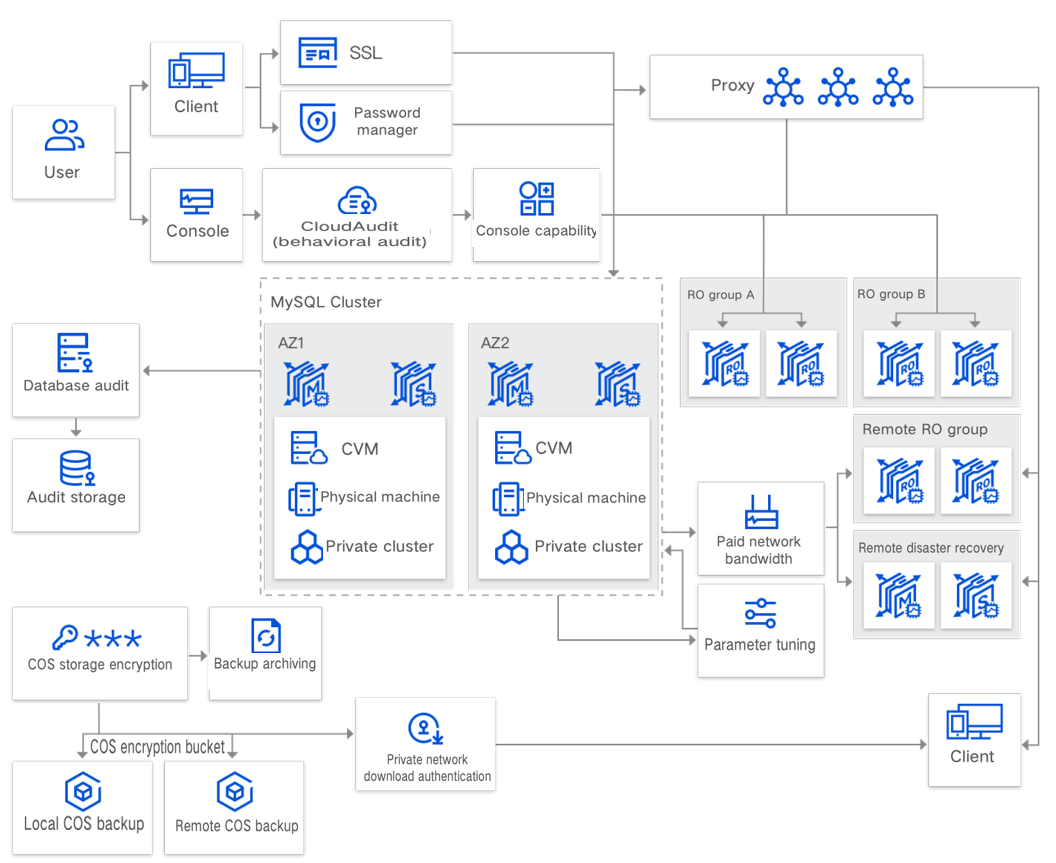
The pain points of database architecture in financial businesses mainly include multiple challenges, such as high security, processing large volumes of data, high performance, high availability, and high scalability. In addition, it is necessary to manage complex queries, transaction isolation, and tuning to ensure database architecture design complies with strict laws and regulations, thereby ensuring data integrity, stability, and reliability. | High security Meeting the requirements of Cybersecurity Classified Protection Compliance Service. Building a three-layer data security protection network before, during, and after events. Multi-layer encryption for leakage prevention. High availability Strong data consistency. Cross-region disaster recovery to reduce the loss caused by single point of failure. | |
| | |
| | |
| | |
| | |
Website/SaaS Scenarios
Business Pain Points | Provided Capabilities | Recommended Pairing Capabilities |
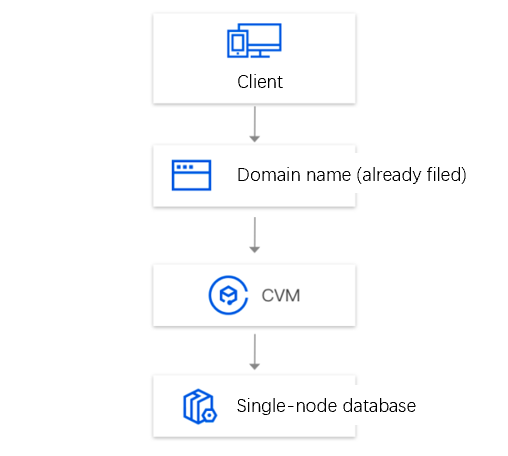
The pain points of database architecture in personal websites and SaaS scenarios include persistent data storage and data security. In addition, it is necessary to process various needs of user queries and data analysis. | Cost-effective Single-node instances have a lower price, and Enhanced SSDs are used for underlying storage, with excellent performance. Quick configuration change Rapid scale-out for computing and storage. | |
| | |
| | |
| | |
| | |
High-Performance Real-Time Data Analysis
Business Pain Points | Provided Capabilities | | Recommended Pairing Capabilities |
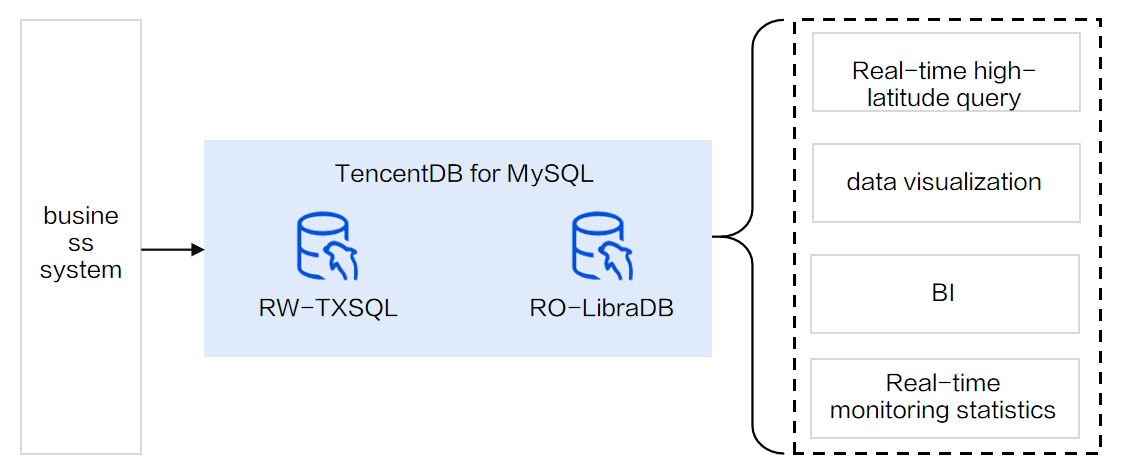
With the continuous growth of data volume, the enterprise needs to process increasingly complex data. Different business departments and users require different types of data analysis, and the real-time requirements of data analysis are becoming more important. This has become a business pain point in today's commercial environment that determines whether an enterprise can quickly access and analyze data to make prompt decisions and strategic adjustments. | Real-time high-dimensional query Data visualization BI report Real-time monitoring and statistics | There is no need to perform Ops on complex and high-cost ETL components. The data of TencentDB for MySQL in the TXSQL engine can be directly synchronized to the LibraDB engine of the read-only instance. LibraDB Engine enables high-performance real-time data analysis in large-scale data scenarios through the vectorized execution engine, massively parallel processing (MPP), and columnar storage acceleration capabilities. | |
| | | |
| | | |
| | | |
| | | |
Help and Support
Was this page helpful?
You can also Contact sales or Submit a Ticket for help.
Help us improve! Rate your documentation experience in 5 mins.
Feedback