tencent cloud

Cloud Streaming Services

Release Notes and Announcements
Announcements
User Guide
Product Introduction
Overview
CSS Products
Concepts
Features
Use Cases
Strengths
Use Limits
Purchase Guide
Billing Overview
Basic Service Fee
Value-Added Service Fee
Prepaid plan
Purchase Process
Changing Billing Modes
Refund Policy
Viewing Bills
Renewal
Processing for Overdue Payments
Billing FAQs
Live Video Broadcasting (LVB)
Overview
Use Cases
Getting Started
SDK Integration
Live Event Broadcasting (LEB)
Overview
LEB Versus LVB
Use Cases
Getting Started
SDK Integration
Live Video Caster
Overview
Application Scenarios
Feature Area Introduction
Managing Live Video Caster
General Cloud Director
Configuring Program Lists and Automated Broadcasting
Console Guide
Console Overview
Overview
Domain Management
Stream Management
Package Management
AI Features
Feature Configuration
Relay
Billing Usage Statistics
Monitoring
Toolkit
OOTB live
CAM-Based Access Control
Feature Guide
Push and Playback
Features
Practices in Typical Scenarios
Cloud Native Recording
Live Streaming Security
Global CSS Service
Callback Notifications
User Guides for Common Third-Party Tools
SDK Guide
0. SDK Integration Guide
1. Stream Push
2. Playback
3. Advanced Features
API Documentation
History
Introduction
API Category
Making API Requests
Live Pad APIs
Live Stream Mix APIs
Time Shifting APIs
Monitoring Data Query APIs
Billing Data Query APIs
Live Transcoding APIs
Delayed Playback Management APIs
Domain Name Management APIs
Watermark Management APIs
Certificate Management APIs
Stream Pulling APIs
Recording Management APIs
Live Callback APIs
Screencapturing and Porn Detection APIs
Authentication Management APIs
Live Stream Management APIs
Data Types
Error Codes
Ops Guide
Video Stuttering
Troubleshooting Push Failure
Troubleshooting Playback Failure
CLS Assists in Live Stream Troubleshooting
Troubleshooting High Latency
Troubleshooting Poor Quality of Pulled Video
Authorizing CSS to Store Screenshots in a COS Bucket
Troubleshooting
Live Stream Mixing Error `InvalidParameter.OtherError`
About Pushing
Generating Push URLs
PC Push
Playing Method
Web Player
Live Streaming Quiz
FAQs
Service Region
Live Streaming Basics
Push and Playback
CSS Billing
Global CSS Service
Live Recording
On-Cloud Stream Mix
Domain Configuration
Related to Live Video Caster
Compatibility with Apple ATS
Difference Between Stream Interruption and Stream Suspension
SLA
CSS Service Level Agreement
CSS Policy
Privacy Policy
Data Processing And Security Agreement
Glossary

Visible Watermark

PDF
Focus Mode
Font Size
Last updated: 2025-12-05 15:03:12
Visible watermarks are achieved by overlaying visible markings (such as images, text, or icons) onto content such as images, text, or videos. They are primarily used to declare copyright, identify sources, or conduct brand promotion, and can intuitively display the ownership information of the content.
In video applications, visible watermarks can effectively enhance brand recognition and provide some copyright warning functionality. However, visible watermarks have relatively low security and are primarily used for identification and promotion, with limited capabilities in preventing data leaks and tracing origins. As a visible layer, visible watermarks are easily cropped, covered, or removed through image processing by third-party tools. For critical scenarios, it is recommended to use them in conjunction with Invisible Watermark(Digital watermark).
CSS supports the watermark feature. It adds watermarks to the live streaming screen to protect video content from theft. This document describes how to create, modify, bind, unbind, and delete a watermark template in the console.
You can create a watermark template in the following ways:
Create a watermark template in the CSS console. For more information, please see Creating Visible Watermark Template.
Create a watermark template by calling an API. For more information, please see AddLiveWatermark.

Notes

After creating a template, you can bind it to a push domain name. The binding will take effect in 5–10 minutes.
Binding, unbinding, and modifying a template affect only new live streams after the update but not ongoing ones. To make the new rule take effect for ongoing live streams, you need to interrupt them and push them again.
The visible watermark feature is a paid value-added service. Using the visible watermark service during push generates a transcoding bill. For billing rules, see Billing Documentation

Prerequisites

You have activated the CSS service and added a push domain name.

Creating Visible Watermark Template

1. Log in to the CSS console and select Feature Configuration > Live Watermarking. Access the Live Streaming Copyright Protection page.
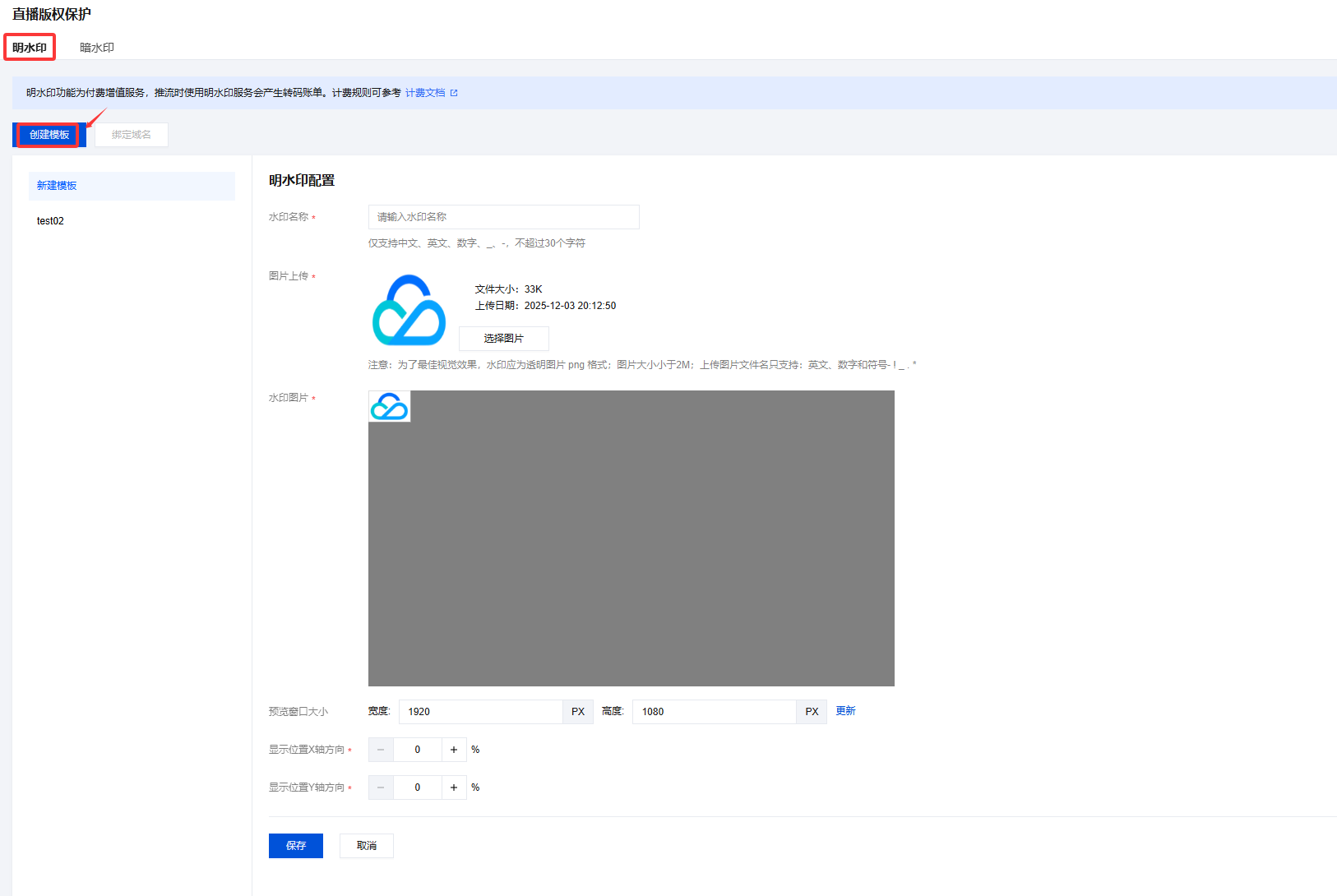
2. Select Visible Watermark and click Create Template to access the Visible Watermark template creation page, then proceed with the following configurations:

Configuration Item
Configuration description
Watermark Name
Enter a watermark name, customizable, Max 30 characters; supports letters, digits, underscores, and dashes
Image Upload
Click Select Image to upload a watermark image. The size of the watermark image supports stretching to full window dimensions.
Note:
For a better visual experience, we recommend you use a transparent PNG image not larger than 2 MB. The filename of the image can only contain letters, numbers, and special characters - ! _ . *
Preview window size
Set the watermark image preview window size:
Default width and height values: Width 1920px, Height 1080px.
Width and height value range: 360px - 4096px.
Clicking Update on the right side will automatically validate and synchronize the update of the watermark image preview window.
X-axis
Specify the watermark location in the following ways:
Drag the watermark image in the configuration pane.
Adjust the coordinates of the X axis and Y axis.
Y-axis
3. Click Save.

Binding Domain Name

1. Log in to the CSS console and select Feature Configuration > Live Watermarking > Visible Watermark.
2. Enter the domain name binding page in either of the following ways:
Directly bind a domain name: click Bind Domain Name in the top-left corner.

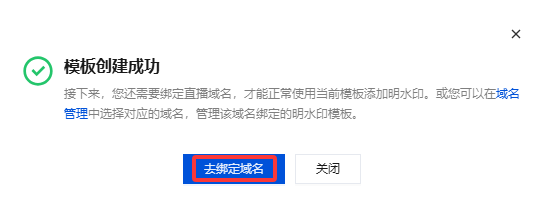
Bind a domain name after creating the visible watermark template: after the visible watermark template is created, click Bind Domain Name in the pop-up window.

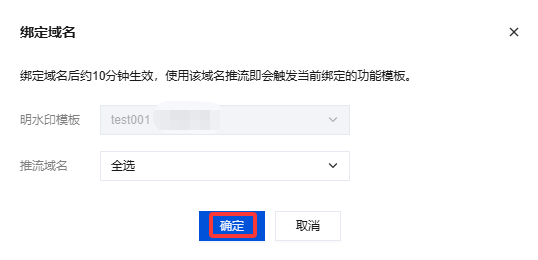
3. In the pop-up window, select a visible watermark template and a push domain name (Multiple push domain names can be bound simultaneously) in the domain name binding window and then click Confirm.


Unbinding

1. Log in to the CSS console and select Feature Configuration > Live Watermarking > Visible Watermark.
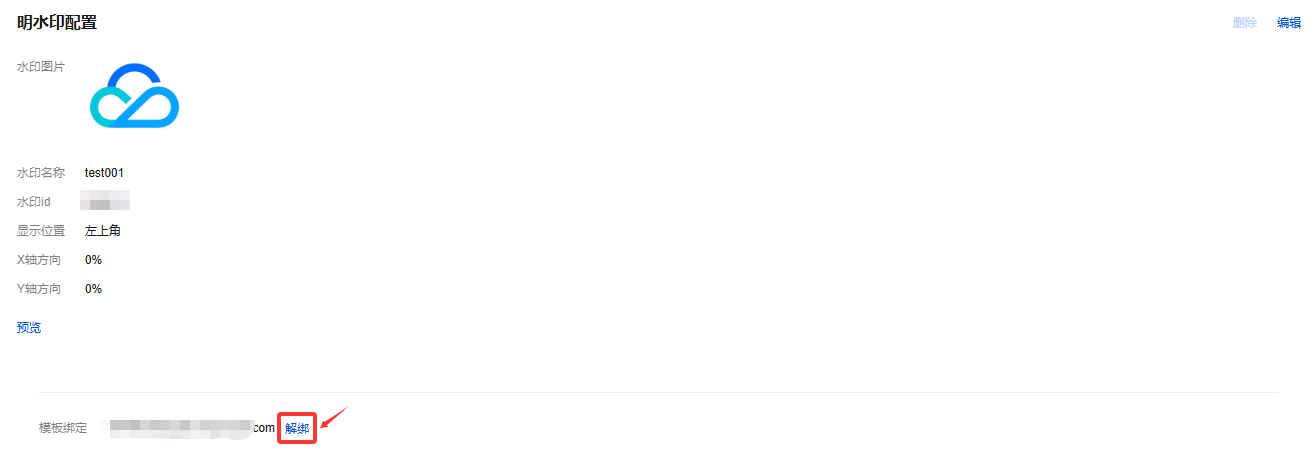
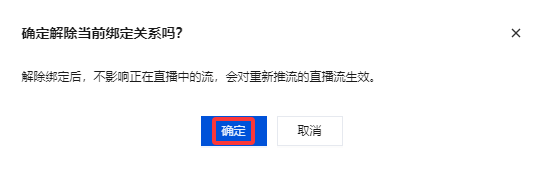
2. Select domain names bound to the visible watermark template and click Unbind.

3. Confirm whether to unbind the domain name and click Confirm to unbind it.


Modifying Template

1. Log in to the CSS console and select Feature Configuration > Live Watermarking > Visible Watermark.
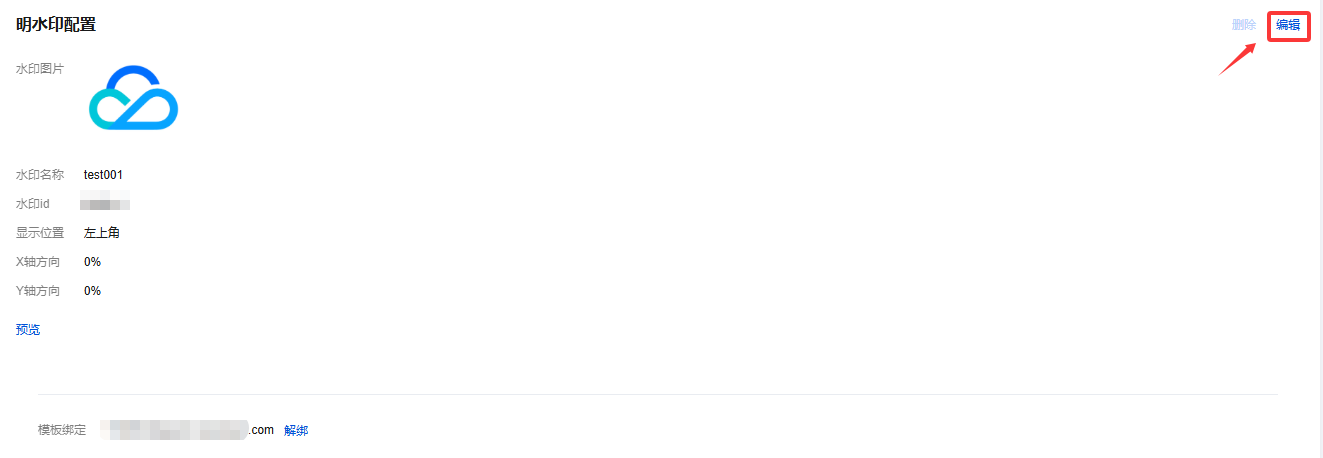
2. Select the target visible watermark template and click Edit on the right to modify the template information.

3. Click Save.
Note:
You can click Preview to view how the visible watermark will be displayed on the screen.

Deleting Template

Note:
If the template is already associated, you need to Unbind it first before you can perform the delete operation.
Once the template is deleted, it cannot be recovered. Please proceed with caution.
1. Log in to the CSS console and select Feature Configuration > Live Watermarking > Visible Watermark.
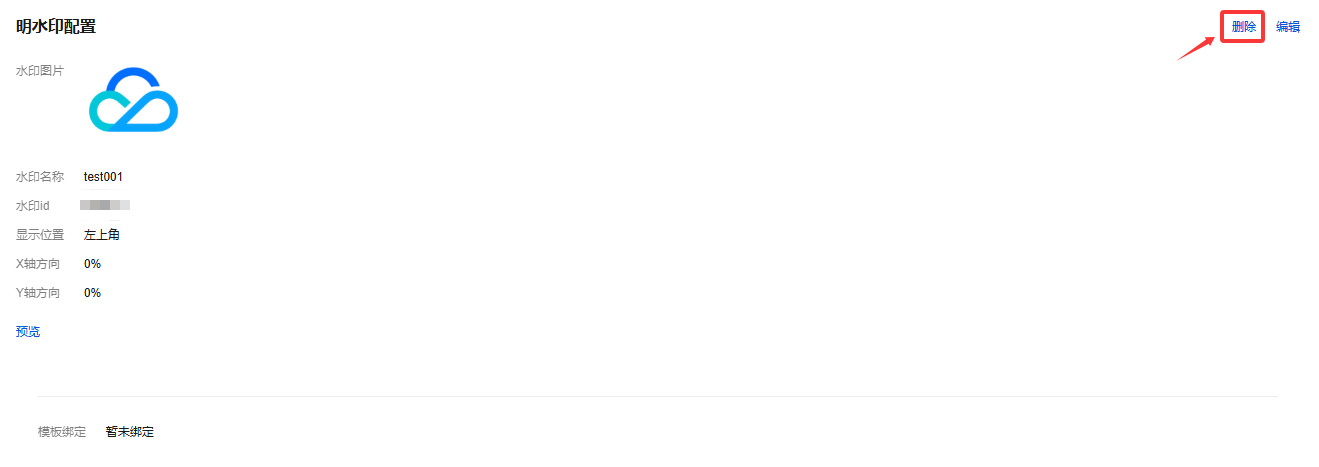
2. Select the visible watermark template you have successfully created, and click Delete in the upper right corner.

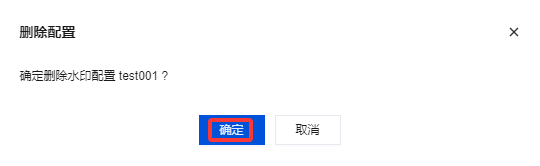
3. In the pop-up dialog box, click Confirm to confirm the deletion.


Relevant Operations

For more information on how to bind/unbind a domain name to/from a visible watermark template, please see Visible Watermark Configuration.


Help and Support

Was this page helpful?

Help us improve! Rate your documentation experience in 5 mins.

Feedback